
 Plot & Petal
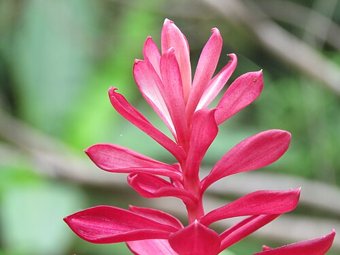
Red ginger
Alpinia purpurata
Photo: "Alpinia purpurata - Red Ginger flower at Palappuzha (9).jpg" by Vinayaraj, CC BY-SA 4.0 (Wikimedia Commons) (CC BY-SA 4.0)

Safety
People: No hazard foundPets: Not on the ASPCA lists as we read them
Neither ASPCA nor NC State lists a pet-safety verdict for this plant. Not listed means no verdict was found, not that it's safe. Keep pets from eating it and call a vet or the ASPCA Poison Control line if a pet seems unwell.
PlotAndPetal cannot tell you whether a plant you found can be eaten. Only someone who can see the plant can identify it.
Poison control
If someone has collapsed, cannot be woken, is having a seizure or has trouble breathing, call 911 now. For any other possible poisoning, call Poison Help: 1-800-222-1222.
Emergency number source: U.S. federal law (47 U.S.C. § 251(e)(3)), read 2026-10-07.
Quick facts
- Hardiness zones
UF/IFAS Nassau County says it is better suited to cold hardiness zones 10 to 11 (Central and South Florida), though some people grow it in Northeast Florida.
- Light
Grows best in full sun; also grows in partial sun and light shade, and tolerates moderate shade but does not thrive in heavy shade (CTAHR). Pink cultivars get tip burn unless given about 30 percent shade.
- Water needs
high
- Mature size
Cane-like stems form a plant 3 to 15 feet tall and 2 to 4 feet wide; the flower spike is 6 to 12 inches long (University of Hawaii CTAHR OF-37). Cultivars vary, with dwarfs listed at 3 to 4 feet.

Full field manual in the app
Step-by-step care
The numbered steps for caring for this plant, where we have them.
Why each step works
The reasons behind the steps, where we have them.
Problems and fixes
What can go wrong with this plant and what to do about it, where we have them.
Soil, feeding and pruning
How to prepare the soil, when and what to feed, and how and when to prune where that applies.
Sources
- University of Hawaii CTAHR, Ornamental Ginger, Red and Pink (OF-37)
- UF/IFAS Extension Nassau County, Q: What can you tell me about the red Hawaiian ginger plant?
- UF/IFAS EDIS, FP036 Alpinia zerumbet 'Variegata' (read, different plant, not used for any fact)
- Kew WCVP (World Checklist of Vascular Plants) bulk files wcvp_names.csv and wcvp_distribution.csv, file dated 2026-06-04, read on the Mac 2026-10-11 (the data POWO shows; POWO pages block scripted reading)