
 Plot & Petal
Field ManualAll plants
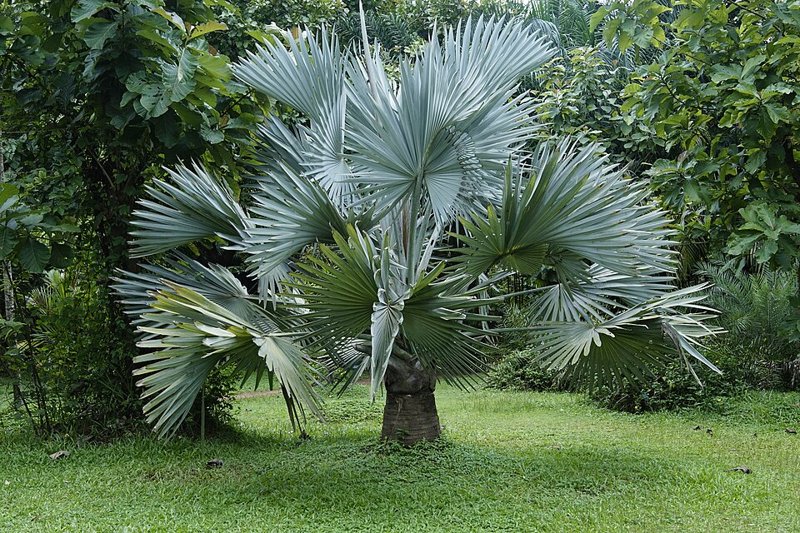
Bismarck Palm
Bismarckia nobilis
- Silvery-Blue Foliage
- Single Large Specimen
- Slow Growing
Pet & Human Safety
People: Not researchedPets: Not on the ASPCA lists as we read them
Genuinely unassessed by ASPCA, not cleared. For context: most true palms ASPCA has evaluated (including Queen Palm, Cat Palm, and King Palm) are rated non-toxic, but that pattern isn't extended here as an inferred safe verdict for an unassessed species. Fishtail Palm (Caryota mitis) is a confirmed-toxic counter-example, so 'true palm' is not a reliable safety shortcut on its own.
PlotAndPetal cannot tell you whether a plant you found can be eaten. Only someone who can see the plant can identify it.
Poison control
If someone has collapsed, cannot be woken, is having a seizure or has trouble breathing, call 911 now. For any other possible poisoning, call Poison Help: 1-800-222-1222.
Emergency number source: U.S. federal law (47 U.S.C. § 251(e)(3)), read 2026-10-07.
Naturalist Lore
Historical Background & Breeding Lore
The history of this plant and its name, and how it was bred, where we have them.
Get the app: coming soonCare
- Hardiness zones
UF/IFAS ST101 says it is hardy to about 30 F (USDA zone 10A) and often survives in protected sites in zone 9B (25 F). The NC State Extension Gardener Plant Toolbox gives different figures, saying the silver-gray form tolerates about 27 F while the green form is damaged at 32 F, and that plants recover from cold damage. The two sources differ, so treat the cold limits as approximate and check local conditions.
- Mature size
UF/IFAS ST101 gives 30 to 60 feet tall, a 12 to 16 foot spread and a trunk 15 to 18 inches across. NC State gives 10 to 40 feet in cultivation (up to about 82 feet in its native habitat) and a trunk 12 to 16 inches across. The sources differ, so expect variation with climate and age.
- Family
Arecaceae (true palm family)
- Where it comes from
Native to Madagascar (UF/IFAS ST101). The NC State Extension Gardener Plant Toolbox gives northern and western Madagascar, in open grassland.
How to prepare the soil, when and what to feed, and how and when to prune where that applies.
Get the app: coming soonAnatomy & Guilds
Botanical Anatomy & Characteristics
How the flowers and leaves are built and which pollinators visit, where we have them.
Get the app: coming soonField Doctor
Field Doctor
What can go wrong with this plant and what to do about it, where we have them.
Get the app: coming soonVintage Plates
Vintage Plates
Old botanical drawings from public libraries are in the app, for plants where we have them.
Get the app: coming soon