
 Plot & Petal
Field ManualAll plants
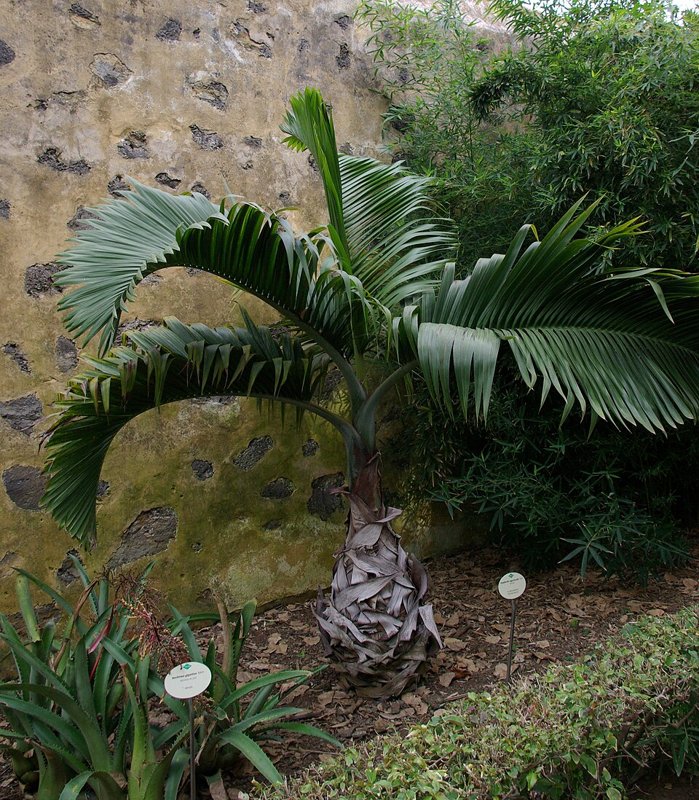
Bottle Palm
Hyophorbe lagenicaulis
- Distinctive Swollen Trunk
- Slow Growing
- Single Specimen Accent
Pet & Human Safety
People: Not researchedPets: Not on the ASPCA lists as we read them
People: not researched yet.
Genuinely unassessed by ASPCA for this actual species: the two 'Bottle Palm' pages that DO exist on ASPCA are both non-toxic verdicts for entirely different, unrelated plants, and applying either to this species would be a naming-trap error. For context: most true palms ASPCA has evaluated are rated non-toxic, but that pattern isn't extended into an inferred verdict here, especially given how easily this exact name could mislead a lookup.
PlotAndPetal cannot tell you whether a plant you found can be eaten. Only someone who can see the plant can identify it.
Poison control
If someone has collapsed, cannot be woken, is having a seizure or has trouble breathing, call 911 now. For any other possible poisoning, call Poison Help: 1-800-222-1222.
Emergency number source: U.S. federal law (47 U.S.C. § 251(e)(3)), read 2026-10-07.
Naturalist Lore
Historical Background & Breeding Lore
The history of this plant and its name, and how it was bred, where we have them.
Get the app: coming soonCare
- Hardiness zones
Not checked yet
- Mature size
Typically a smaller, slow-growing palm reaching roughly 10-12 feet tall at maturity, with the distinctive bottle-shaped trunk widest near the base.
- Family
Arecaceae (true palm family)
How to prepare the soil, when and what to feed, and how and when to prune where that applies.
Get the app: coming soonAnatomy & Guilds
Botanical Anatomy & Characteristics
How the flowers and leaves are built and which pollinators visit, where we have them.
Get the app: coming soonField Doctor
Field Doctor
What can go wrong with this plant and what to do about it, where we have them.
Get the app: coming soonVintage Plates
Vintage Plates
Old botanical drawings from public libraries are in the app, for plants where we have them.
Get the app: coming soon