
 Plot & Petal
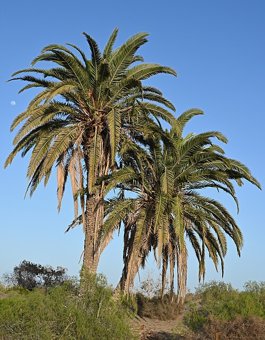
Canary Island date palm
Phoenix canariensis
- true palm
- landscape/street tree palm
Photo: "Phoenix canariensis kz05 (cropped).jpg" by Krzysztof Ziarnek, Kenraiz, CC BY-SA 4.0 (Wikimedia Commons) (CC BY-SA 4.0)

Safety
People: Hazard to peoplePets: Not assessed for pets
ASPCA lists Phoenix canariensis by name as non-toxic to dogs, cats, and horses. The plant's real hazard is physical, not toxic: sharp spines on the petioles.
PlotAndPetal cannot tell you whether a plant you found can be eaten. Only someone who can see the plant can identify it.
Poison control
If someone has collapsed, cannot be woken, is having a seizure or has trouble breathing, call 911 now. For any other possible poisoning, call Poison Help: 1-800-222-1222.
Emergency number source: U.S. federal law (47 U.S.C. § 251(e)(3)), read 2026-10-07.
Quick facts
- Hardiness zones
9-11
- Water needs
Drought tolerant once established; benefits from consistent moisture while young.
- Mature size
40-60 ft tall, 20-40 ft wide; columnar trunk 2-3 ft in diameter; arching compound leaves up to 15 ft long. UF/IFAS EDIS ST439 gives a closely consistent 40-50 ft tall figure and notes a slow growth rate of roughly 50 new leaves per year in South Florida conditions.

Full field manual in the app
Step-by-step care
The numbered steps for caring for this plant, where we have them.
Why each step works
The reasons behind the steps, where we have them.
Problems and fixes
What can go wrong with this plant and what to do about it, where we have them.
Soil, feeding and pruning
How to prepare the soil, when and what to feed, and how and when to prune where that applies.