Field ManualAll plants

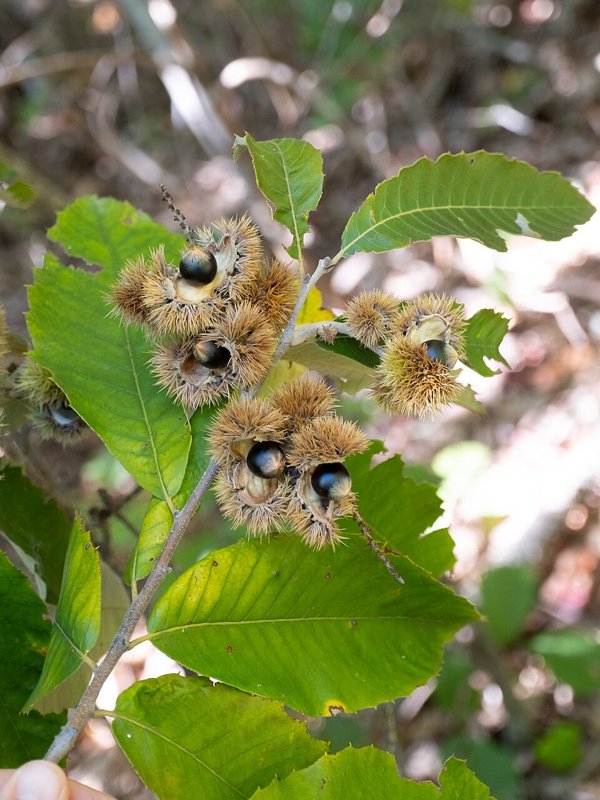
Photo: Alex Abair, via Wikimedia CommonsLicense: CC BY 4.0

Chinquapin

Castanea pumila

Family: Fagaceae

Pet & Human Safety

People: Hazard to peoplePets: Not on the ASPCA lists as we read them
Human edibility
Edible
Edible parts
nuts
Hazardous parts
Not yet checked.
Preparation
Not yet checked.
Hazard type
Not yet checked.
Hazard route
the fruit is a spiny bur (NC State)
How complete this information is
The safety information on this page is partial. Where a source covers a point, it is shown; where none does, the page says so.

Toxic to pets
No ASPCA entry found.

ASPCA lists 'Chestnut' (Castanea dentata, American chestnut) as non-toxic to dogs, cats and horses. That is the same genus but a different species, so it is not carried as a verdict for chinquapin; no ASPCA page for Castanea pumila was found. NC State's page for C. pumila has no pet-poison section.

Look-alike warning
Could be mistaken for Look-alike plants. To tell them apart: NC State: often confused with Quercus acutissima (sawtooth oak)..
Look-alike warning
Could be mistaken for Plants that share its name. To tell them apart: 'Chinquapin' is shared by other trees: the NC State Plant Toolbox says Castanea pumila is often confused with Quercus acutissima (sawtooth oak), and the Gardener Handbook's figure caption 12 calls the plant 'Chinquapin oak (Castanea pumila)', which is a caption oddity (chinquapin oak is a different species). Check the species before gathering or planting anything by this common name..

Poison control

If someone has collapsed, cannot be woken, is having a seizure or has trouble breathing, call 911 now. For any other possible poisoning, call Poison Help: 1-800-222-1222.

Emergency number source: U.S. federal law (47 U.S.C. § 251(e)(3)), read 2026-10-07.

Naturalist Lore

Historical Background & Breeding Lore

The history of this plant and its name, and how it was bred, where we have them.

Get the app: coming soon

Care

Hardiness zones

USDA 5a to 9b (NC State)

Mature size

Height 15 to 30 ft, width 10 to 20 ft (NC State); the NC State text says 15 to 30 ft when grown as a tree.

Soil & Drainage
Pruning & Flush Rhythm
Feeding Schedule

How to prepare the soil, when and what to feed, and how and when to prune where that applies.

Get the app: coming soon

Anatomy & Guilds

Botanical Anatomy & Characteristics

How the flowers and leaves are built and which pollinators visit, where we have them.

Get the app: coming soon

Field Doctor

Field Doctor

What can go wrong with this plant and what to do about it, where we have them.

Get the app: coming soon

Vintage Plates

Vintage Plates

Old botanical drawings from public libraries are in the app, for plants where we have them.

Get the app: coming soon

Sources

  1. NC State Extension Gardener Plant Toolbox, Castanea pumila
  2. NC State Extension Gardener Handbook, ch. 15 Tree Fruit and Nuts
  3. ASPCA, Toxic and Non-toxic Plants: Chestnut (page is for Castanea dentata)
  4. Kew World Checklist of Vascular Plants (WCVP) name file, dated 2026-06-04

How we choose sources

Wishlists live in the app

Wishlists are part of the Plot & Petal app, which is coming soon. Nothing is added to a wishlist from this page.

Get the app: coming soon