
 Plot & Petal
Field ManualAll plants
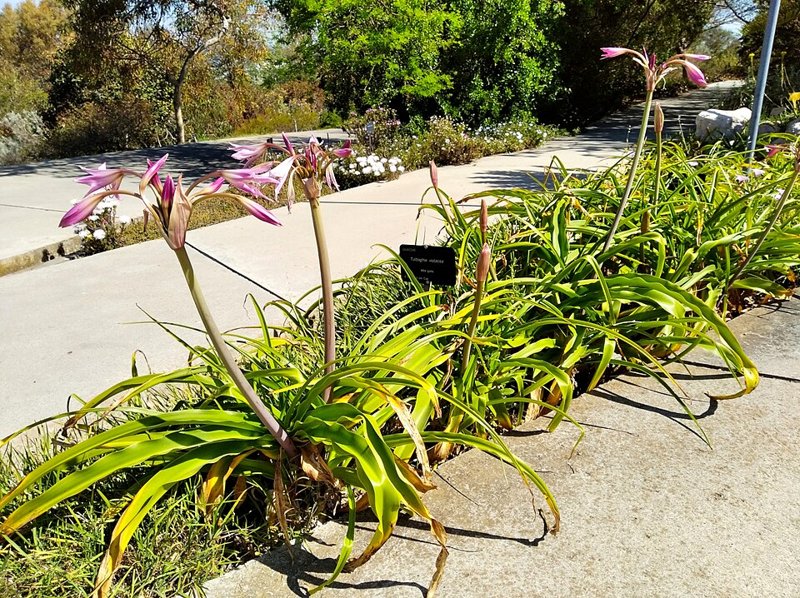
Crinum Lily
Crinum L.
Family: Amaryllidaceae
- Bulb
- Perennial
- Fragrant
- Tolerates Wet Roots
Pet & Human Safety
People: Toxic to people (low severity)Pets: Toxic to pets
Treat every Crinum as toxic to dogs and cats. UF/IFAS says crinums contain toxic alkaloids that can cause poisoning if consumed; NC State flags Crinum americanum as a problem for cats, dogs and children; the RHS says the bulbs are not to be eaten by pets. The sources do not list animal-specific signs. UF/IFAS publication FP155 makes no toxicity statement, which is silence rather than disagreement. ASPCA's Amaryllis page covers a different genus and does not describe Crinum.
PlotAndPetal cannot tell you whether a plant you found can be eaten. Only someone who can see the plant can identify it.
Poison control
If someone has collapsed, cannot be woken, is having a seizure or has trouble breathing, call 911 now. For any other possible poisoning, call Poison Help: 1-800-222-1222.
Emergency number source: U.S. federal law (47 U.S.C. § 251(e)(3)), read 2026-10-07.
Naturalist Lore
Historical Background & Breeding Lore
The history of this plant and its name, and how it was bred, where we have them.
Get the app: coming soonCare
- Hardiness zones
USDA 8B-11 for crinum lilies in general (UF/IFAS FP155); 8a-11b for Crinum americanum (NC State); RHS hardiness H5 for Crinum x powellii (may need frost protection in colder areas)
- Light
Part shade to full sun
- Water needs
moderate
- Mature size
3-5 ft tall and 3-5 ft wide (UF/IFAS FP155, whole-genus). UF/IFAS Gardening Solutions: from about 13 in to 6 ft by species. Crinum americanum: 2-3 ft tall, 1-2 ft wide (NC State). Crinum x powellii: 1-1.5 m tall (RHS). Clemson: 24-48 in. Spacing: UF/IFAS FP155: 36 to 60 inches in its table, and four to six feet apart in mass plantings. Neck at soil level (UF/IFAS Gardening Solutions); RHS: keep the bulb neck just above the soil.
- Where it comes from
Crinum americanum is native to the southeastern US (Alabama, Florida, Georgia, Louisiana, Mississippi, South Carolina, Texas), the Cayman Islands, Jamaica and parts of Mexico (NC State). UF/IFAS (FP155) says the cultivated crinum lilies it covers are not native to North America. The genus has about 130 species (UF/IFAS Gardening Solutions).
How to prepare the soil, when and what to feed, and how and when to prune where that applies.
Get the app: coming soonAnatomy & Guilds
Botanical Anatomy & Characteristics
How the flowers and leaves are built and which pollinators visit, where we have them.
Get the app: coming soonField Doctor
Field Doctor
What can go wrong with this plant and what to do about it, where we have them.
Get the app: coming soonVintage Plates
Vintage Plates
Old botanical drawings from public libraries are in the app, for plants where we have them.
Get the app: coming soonSources
- POWO (Kew), genus Crinum L., Amaryllidaceae (common name swamp lily)
- UF/IFAS Gardening Solutions, Crinums
- UF/IFAS Extension, FPS155 Crinum spp., Crinum Lily
- NC State Extension Gardener Plant Toolbox, Crinum americanum
- RHS, Crinum x powellii (swamp lily)
- Clemson Cooperative Extension HGIC, Summer and Fall Flowering Bulbs (Crinum section)
- ASPCA, Toxic and Non-toxic Plants: Amaryllis (Amaryllis spp.; a different genus, read to rule out confusion)