
 Plot & Petal
Field ManualAll plants
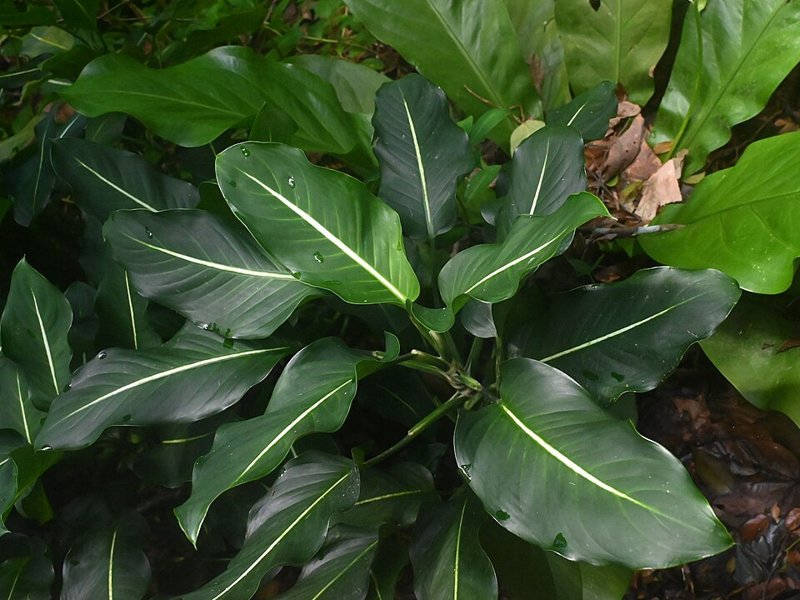
Dieffenbachia
Dieffenbachia seguine
Zones: 10a-11b outdoors; grown as a houseplant everywhere else
- Houseplant
Pet & Human Safety
Toxic to people and pets
Toxic principle: insoluble calcium oxalate crystals and a proteolytic enzyme, in leaves, roots, stems, and sap. Clinical signs: oral irritation, intense burning of mouth/tongue/lips, excessive drooling, vomiting, difficulty swallowing. For humans, NC State Extension separately rates this a high-severity poison: needle-like crystals can become embedded in the mouth and throat, and sap contact with eyes can cause corneal damage; the plant also causes contact dermatitis.
PlotAndPetal cannot tell you whether a plant you found can be eaten. Only someone who can see the plant can identify it.
Poison control
If someone has collapsed, cannot be woken, is having a seizure or has trouble breathing, call 911 now. For any other possible poisoning, call Poison Help: 1-800-222-1222.
Emergency number source: U.S. federal law (47 U.S.C. § 251(e)(3)), read 2026-10-07.
Naturalist Lore
Historical Background & Breeding Lore
The history of this plant and its name, and how it was bred, where we have them.
Get the app: coming soonCare
- Hardiness zones
USDA zones 10a-11b outdoors; grown as a houseplant everywhere else.
- Water needs
moderate keep moist; allow top 1 in of soil to dry between waterings
- Mature size
3-8 ft tall, 2-3 ft wide; erect, scarcely branched, broadleaf evergreen perennial.
- Family
Araceae (arum family)
- Where it comes from
Caribbean to tropical South America (Bolivia, Brazil, Colombia, Ecuador, Venezuela, and others).
How to prepare the soil, when and what to feed, and how and when to prune where that applies.
Get the app: coming soonAnatomy & Guilds
Botanical Anatomy & Characteristics
How the flowers and leaves are built and which pollinators visit, where we have them.
Get the app: coming soonField Doctor
Field Doctor
What can go wrong with this plant and what to do about it, where we have them.
Get the app: coming soonVintage Plates
Vintage Plates
Old botanical drawings from public libraries are in the app, for plants where we have them.
Get the app: coming soon