
 Plot & Petal
Field ManualAll plants
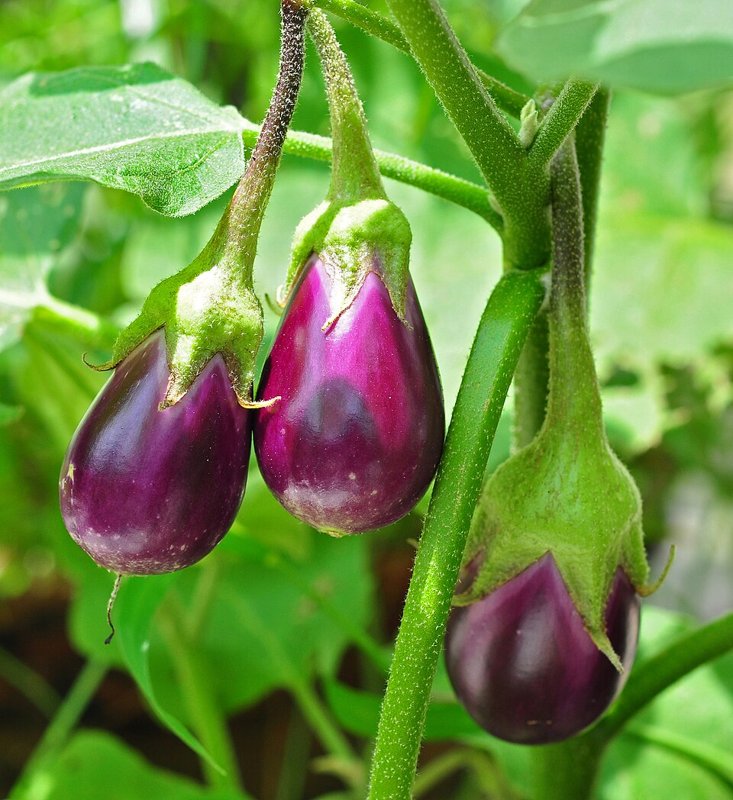
Eggplant
Solanum melongena L.
Origin: South-central China, Laos, Myanmar, Thailand, and Vietnam
- Warm-season annual
Pet & Human Safety
Toxic to people and pets
Toxic principle is solanine and related alkaloids, concentrated in the leaves, flowers, stems, and roots: not the ripe fruit. NC State's own human-hazard note for this species: ingesting the leaves, flowers, stems, or roots can cause throat burning, nausea, vomiting, and irregular heart rhythm, which may be fatal; only the mature fruit and seeds are the edible part, and raw fruit should be avoided as well.
Poison control
If someone has collapsed, cannot be woken, is having a seizure or has trouble breathing, call 911 now. For any other possible poisoning, call Poison Help: 1-800-222-1222.
Emergency number source: U.S. federal law (47 U.S.C. § 251(e)(3)), read 2026-10-07.
Naturalist Lore
Historical Background & Breeding Lore
The history of this plant and its name, and how it was bred, where we have them.
Get the app: coming soonCare
- Hardiness zones
Warm-season annual everywhere; frost-tender, planted after the last frost once soil has warmed.
- Water needs
consistent moisture; loamy or sandy well-drained soil kept moist
- Mature size
2-4 ft tall, 1-3 ft wide; erect, multi-stemmed herbaceous annual.
- Family
Solanaceae (nightshade family)
How to prepare the soil, when and what to feed, and how and when to prune where that applies.
Get the app: coming soonAnatomy & Guilds
Botanical Anatomy & Characteristics
How the flowers and leaves are built and which pollinators visit, where we have them.
Get the app: coming soonField Doctor
Field Doctor
What can go wrong with this plant and what to do about it, where we have them.
Get the app: coming soonVintage Plates
Vintage Plates
Old botanical drawings from public libraries are in the app, for plants where we have them.
Get the app: coming soon