
 Plot & Petal
Field ManualAll plants
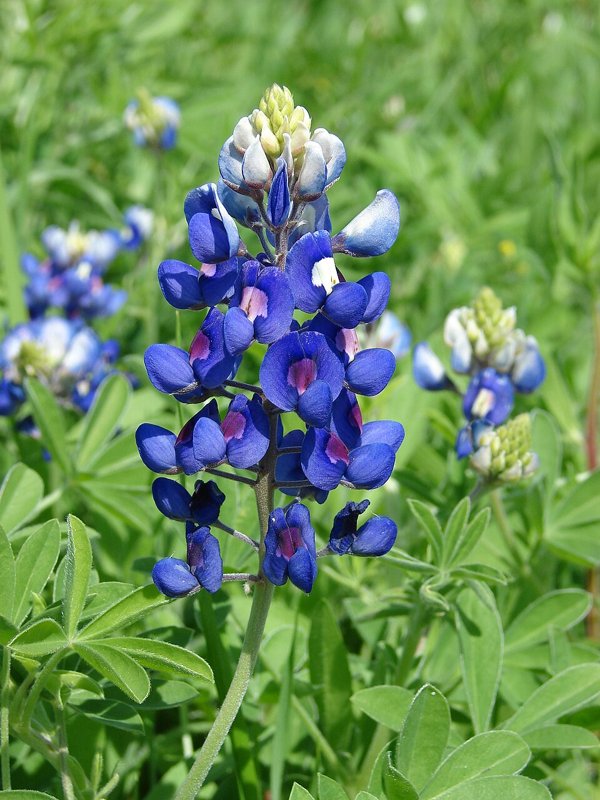
Texas Bluebonnet
Lupinus texensis
Family: Fabaceae
- Texas State Flower
- Nitrogen-Fixing Legume
Pet & Human Safety
People: Not researchedPets: Toxic to pets
People: not researched yet.
Lupine (Lupinus) toxicity is well documented in general veterinary and rangeland toxicology literature: quinolizidine alkaloids, concentrated especially in the seeds, are a recognized cause of livestock poisoning ("lupinosis") across the genus, and this species' own academic profile page explicitly extends the warning to animals, not just people. Not covered by ASPCA's own small-animal-focused database or by NC State Extension, likely because this is a Texas-region native outside their usual coverage area rather than because it's been specifically cleared. Treat all parts, and especially the seeds, as a hazard for pets.
PlotAndPetal cannot tell you whether a plant you found can be eaten. Only someone who can see the plant can identify it.
Poison control
If someone has collapsed, cannot be woken, is having a seizure or has trouble breathing, call 911 now. For any other possible poisoning, call Poison Help: 1-800-222-1222.
Emergency number source: U.S. federal law (47 U.S.C. § 251(e)(3)), read 2026-10-07.
Naturalist Lore
Historical Background & Breeding Lore
The history of this plant and its name, and how it was bred, where we have them.
Get the app: coming soonCare
- Hardiness zones
Grown as a cool-season annual, chiefly in Texas and the surrounding region; the official state flower of Texas
- Mature size
Up to 60 cm (about 2 ft) tall; seed pods 2.5-4.2 cm long.
- Where it comes from
Louisiana west to west Texas, south to San Luis Potosi in northern Mexico; in Texas, found mainly in the Blackland Prairie and Edwards Plateau
How to prepare the soil, when and what to feed, and how and when to prune where that applies.
Get the app: coming soonAnatomy & Guilds
Botanical Anatomy & Characteristics
How the flowers and leaves are built and which pollinators visit, where we have them.
Get the app: coming soonField Doctor
Field Doctor
What can go wrong with this plant and what to do about it, where we have them.
Get the app: coming soonVintage Plates
Vintage Plates
Old botanical drawings from public libraries are in the app, for plants where we have them.
Get the app: coming soon