
 Plot & Petal
Field ManualAll plants
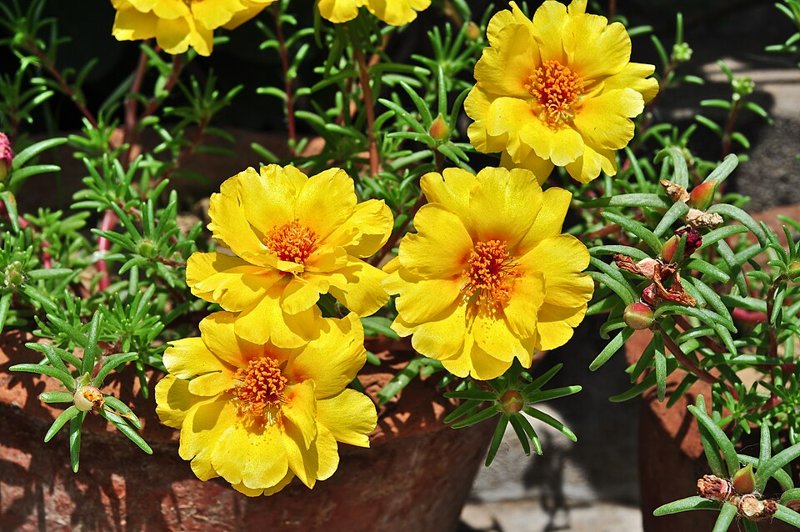
Moss Rose
Portulaca grandiflora
Family: PortulacaceaeOrigin: Brazil, Argentina, and Uruguay
- Succulent Annual
- Heat and Drought Tolerant
Pet & Human Safety
People: Not researchedPets: Not on the ASPCA lists as we read them
People: not researched yet.
ASPCA's page for the same-genus relative Portulaca oleracea lists soluble calcium oxalate poisoning, with kidney failure (rare in dogs and cats), tremors and salivation. NC State Extension's page for this exact species (P. grandiflora) gives no pet toxicity information either way, so treat it with caution.
PlotAndPetal cannot tell you whether a plant you found can be eaten. Only someone who can see the plant can identify it.
Poison control
If someone has collapsed, cannot be woken, is having a seizure or has trouble breathing, call 911 now. For any other possible poisoning, call Poison Help: 1-800-222-1222.
Emergency number source: U.S. federal law (47 U.S.C. § 251(e)(3)), read 2026-10-07.
Naturalist Lore
Historical Background & Breeding Lore
The history of this plant and its name, and how it was bred, where we have them.
Get the app: coming soonCare
- Hardiness zones
Grown as an annual in all US zones (NC State Extension)
- Mature size
Space plants 12 in to 3 ft apart; low, spreading habit.
How to prepare the soil, when and what to feed, and how and when to prune where that applies.
Get the app: coming soonAnatomy & Guilds
Botanical Anatomy & Characteristics
How the flowers and leaves are built and which pollinators visit, where we have them.
Get the app: coming soonField Doctor
Field Doctor
What can go wrong with this plant and what to do about it, where we have them.
Get the app: coming soonVintage Plates
Vintage Plates
Old botanical drawings from public libraries are in the app, for plants where we have them.
Get the app: coming soon