
 Plot & Petal
Field ManualAll plants
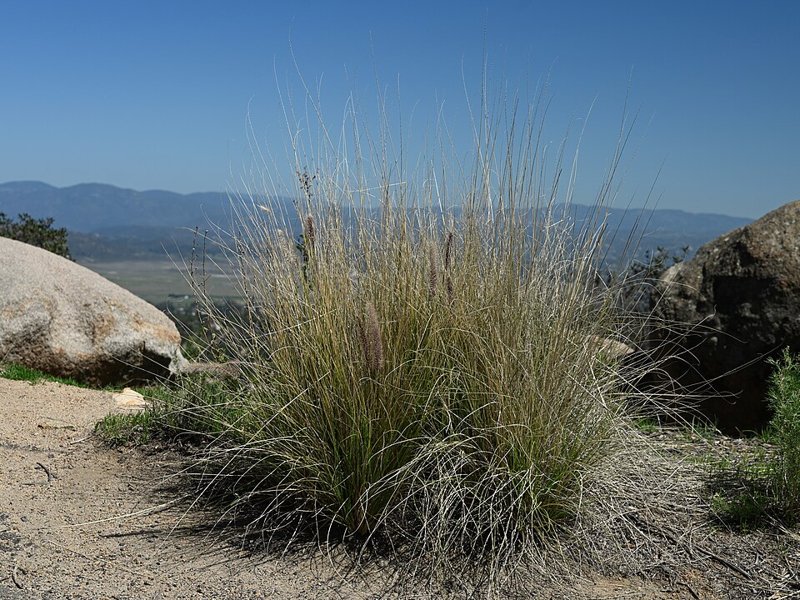
Fountain Grass
Cenchrus setaceus
Family: Poaceae
- Architectural Texture
- Wind Movement
- Burgundy Foliage
- Invasive-Status Caution
Pet & Human Safety
People: Not researchedPets: Not on the ASPCA lists as we read them
Not on the ASPCA cat or dog plant lists. Not being listed is not the same as confirmed safe, so keep pets from chewing it. The seed awns can also cause mechanical injury: embedding in paws, ears, or mouths: a known issue with bristly ornamental grasses generally.
PlotAndPetal cannot tell you whether a plant you found can be eaten. Only someone who can see the plant can identify it.
Poison control
If someone has collapsed, cannot be woken, is having a seizure or has trouble breathing, call 911 now. For any other possible poisoning, call Poison Help: 1-800-222-1222.
Emergency number source: U.S. federal law (47 U.S.C. § 251(e)(3)), read 2026-10-07.
Naturalist Lore
Historical Background & Breeding Lore
The history of this plant and its name, and how it was bred, where we have them.
Get the app: coming soonCare
- Hardiness zones
9 - 11; grown as an annual in colder zones (UF/IFAS)
- Mature size
Height: 4-6 ft. Spread: 2-4 ft (UF/IFAS EDIS FP464).
- Where it comes from
Tropical Africa and the Middle East; the straight species is naturalized/invasive in parts of Florida
How to prepare the soil, when and what to feed, and how and when to prune where that applies.
Get the app: coming soonAnatomy & Guilds
Botanical Anatomy & Characteristics
How the flowers and leaves are built and which pollinators visit, where we have them.
Get the app: coming soonField Doctor
Field Doctor
What can go wrong with this plant and what to do about it, where we have them.
Get the app: coming soonVintage Plates
Vintage Plates
Old botanical drawings from public libraries are in the app, for plants where we have them.
Get the app: coming soonSources
- UF/IFAS Gardening Solutions, Purple Fountain Grass
- UF/IFAS EDIS FP464 (Gilman, Klein & Hansen; orig. Oct 1999, last modified Sept 2024), Pennisetum setaceum 'Rubrum'
- Wilson, S.B. & Knox, G.W. (2009). "Landscape Performance of Green Fountain Grass Alternatives Grown in Northern and Southern Florida." HortTechnology 19(2):471-476. (Checked October 2026)
- UF/IFAS Assessment Plant Directory, Pennisetum setaceum
- NC State Extension Gardener Plant Toolbox - Pennisetum setaceum 'Rubrum' (current accepted genus name: Cenchrus setaceus)