 Plot & Petal
Field ManualAll plants
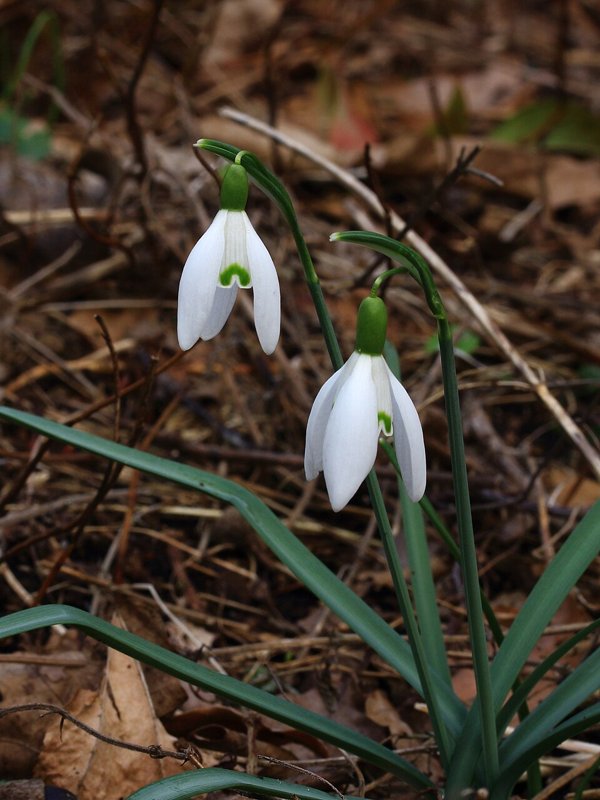
Snowdrop
Galanthus nivalis L.
- Late-Winter Bulb
- Deer Resistant
Pet & Human Safety
People: Toxic to people (low severity)Pets: Toxic to pets
RHS says the plant is harmful if eaten, to people and to pets such as dogs and cats, and advises gloves when handling. IVIS (author at Colorado State University) names phenanthridine alkaloids including lycorine in the leaves, stems and bulbs, most concentrated in the outer bulb layers; bulbs left within reach of pets pose the greatest risk. Signs it lists: vomiting, drooling, abdominal pain, diarrhea and breathing difficulty, and after large amounts depression, unsteadiness, seizures, slow heart rate and low blood pressure. If a pet eats any part, call your vet or an animal poison hotline.
PlotAndPetal cannot tell you whether a plant you found can be eaten. Only someone who can see the plant can identify it.
Poison control
If someone has collapsed, cannot be woken, is having a seizure or has trouble breathing, call 911 now. For any other possible poisoning, call Poison Help: 1-800-222-1222.
Emergency number source: U.S. federal law (47 U.S.C. § 251(e)(3)), read 2026-10-07.
Naturalist Lore
Historical Background & Breeding Lore
The history of this plant and its name, and how it was bred, where we have them.
Get the app: coming soonCare
- Hardiness zones
USDA zones 3a-9b (NC State). RHS H5 (hardy in most places throughout the UK even in severe winters). Systems are not converted.
- Light
part shade (also full sun in NC State)
- Water needs
moderate
- Mature size
4-10 in tall and 3-6 in wide (NC State); RHS 0.1-0.5 m tall.
- Family
Amaryllidaceae (amaryllis family)
- Where it comes from
Europe and southwestern Asia, from Spain east to Ukraine; naturalized in North Carolina, Virginia and several other states (NC State). Not native to Great Britain or Ireland (RHS).
How to prepare the soil, when and what to feed, and how and when to prune where that applies.
Get the app: coming soonAnatomy & Guilds
Botanical Anatomy & Characteristics
How the flowers and leaves are built and which pollinators visit, where we have them.
Get the app: coming soonField Doctor
Field Doctor
What can go wrong with this plant and what to do about it, where we have them.
Get the app: coming soonVintage Plates
Vintage Plates
Old botanical drawings from public libraries are in the app, for plants where we have them.
Get the app: coming soonSources
- NC State Extension Gardener Plant Toolbox, Galanthus nivalis
- RHS, Galanthus nivalis
- RHS, Naturalising bulbs in grass
- IVIS (International Veterinary Information Service), Guide to Poisonous House and Garden Plants: Galanthus nivalis (Snowdrop), A. Knight, Colorado State University
- Kew Plants of the World Online, Galanthus nivalis