
 Plot & Petal
Field ManualAll plants
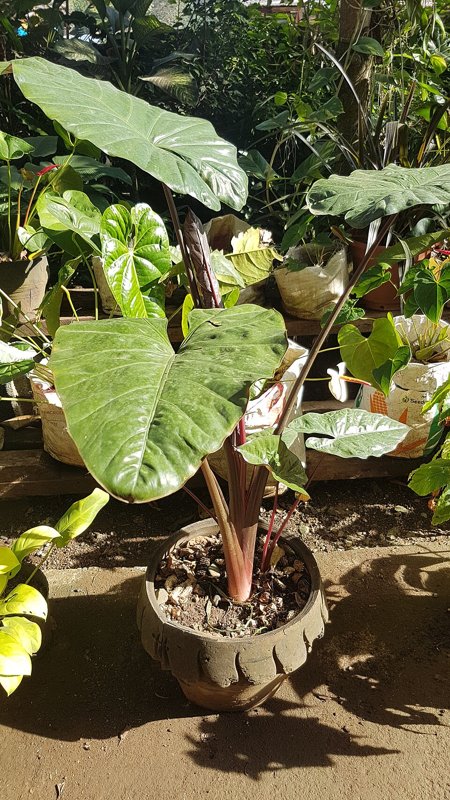
Giant Taro
Alocasia macrorrhizos (L.) G.Don
- Dramatic Large Foliage
- Same Genus as Zebra Alocasia
Pet & Human Safety
Toxic to people and pets
ASPCA's Alocasia page covers the genus directly (not one species), so this is a direct whole-genus listing rather than an inference across genera: the same evidentiary strength already established for the zebra alocasia entry in PlotAndPetal. Insoluble calcium oxalate crystals are the toxic principle across the genus, causing oral irritation, intense burning of the mouth and lips, excessive drooling, vomiting, and difficulty swallowing if chewed or ingested.
PlotAndPetal cannot tell you whether a plant you found can be eaten. Only someone who can see the plant can identify it.
Poison control
If someone has collapsed, cannot be woken, is having a seizure or has trouble breathing, call 911 now. For any other possible poisoning, call Poison Help: 1-800-222-1222.
Emergency number source: U.S. federal law (47 U.S.C. § 251(e)(3)), read 2026-10-07.
Naturalist Lore
Historical Background & Breeding Lore
The history of this plant and its name, and how it was bred, where we have them.
Get the app: coming soonCare
- Hardiness zones
The two sources used give different ranges. NC State Extension Gardener Plant Toolbox recommends USDA zones 10a to 12b for growing outdoors, while UF/IFAS (FP033) lists zones 8A through 11 for Alocasia in its table. Check which applies in your own area with your local extension office before planting outdoors.
- Mature size
The sources used give different sizes. NC State Extension Gardener Plant Toolbox lists 2 to 10 feet tall and wide, with the 'Borneo Giant' form reaching about 15 feet, while UF/IFAS (FP033) gives 12 to 15 feet tall for this species.
- Family
Araceae (aroid family)
- Where it comes from
NC State Extension Gardener Plant Toolbox gives the native range as tropical and subtropical Asia to eastern Australia, and UF/IFAS (FP033, Alocasia spp.) describes the genus as native to the Asia-Pacific region.
How to prepare the soil, when and what to feed, and how and when to prune where that applies.
Get the app: coming soonAnatomy & Guilds
Botanical Anatomy & Characteristics
How the flowers and leaves are built and which pollinators visit, where we have them.
Get the app: coming soonField Doctor
Field Doctor
What can go wrong with this plant and what to do about it, where we have them.
Get the app: coming soonVintage Plates
Vintage Plates
Old botanical drawings from public libraries are in the app, for plants where we have them.
Get the app: coming soonSources
- ASPCA, Toxic and Non-toxic Plants: Alocasia (whole-genus page that directly covers this species)
- NC State Extension Gardener Plant Toolbox, Alocasia macrorrhizos (Giant Taro)
- UF/IFAS EDIS FP033, Alocasia spp.: Elephant's Ear, Alocasia, Taro
- UF/IFAS Gardening Solutions, Elephant Ears
- Royal Horticultural Society