
 Plot & Petal
Field ManualAll plants
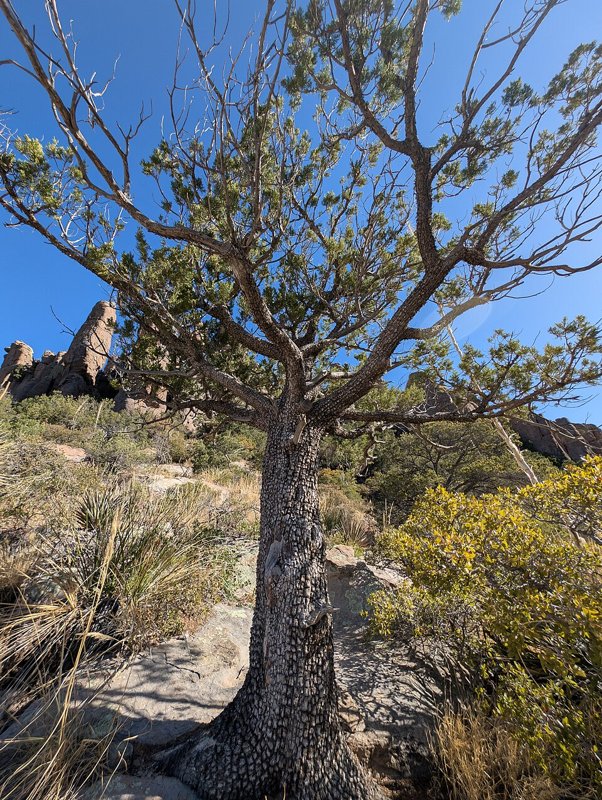
Alligator juniper
Juniperus deppeana
Family: Cupressaceae
Pet & Human Safety
People: No hazard foundPets: Not on the ASPCA lists as we read them
No ASPCA page for this species. FEIS says foliage is relatively unpalatable to livestock; that is a browsing statement, not a toxicity verdict. Do not treat as pet-safe.
PlotAndPetal cannot tell you whether a plant you found can be eaten. Only someone who can see the plant can identify it.
Poison control
If someone has collapsed, cannot be woken, is having a seizure or has trouble breathing, call 911 now. For any other possible poisoning, call Poison Help: 1-800-222-1222.
Emergency number source: U.S. federal law (47 U.S.C. § 251(e)(3)), read 2026-10-07.
Naturalist Lore
Historical Background & Breeding Lore
The history of this plant and its name, and how it was bred, where we have them.
Get the app: coming soonCare
- Hardiness zones
Not checked yet
- Water needs
low low is a plain-language reading of FEIS: it survives short droughts and stops growing when moisture is short, but more than 6 years of drought can kill it; annual precipitation in its pinyon-juniper woodland is 12-22 in (305-559 mm). FEIS is a wild-stand source. Always finger-test two inches down.
- Mature size
FEIS: usually 20-40 ft (6-12 m) tall at maturity; can reach 65 ft (20 m) and trunks 7 ft (2.1 m) across; very slow growth (about 0.6 inch of trunk diameter per decade when young)
How to prepare the soil, when and what to feed, and how and when to prune where that applies.
Get the app: coming soonAnatomy & Guilds
Botanical Anatomy & Characteristics
How the flowers and leaves are built and which pollinators visit, where we have them.
Get the app: coming soonField Doctor
Field Doctor
What can go wrong with this plant and what to do about it, where we have them.
Get the app: coming soonVintage Plates
Vintage Plates
Old botanical drawings from public libraries are in the app, for plants where we have them.
Get the app: coming soon