
 Plot & Petal
Field ManualAll plants
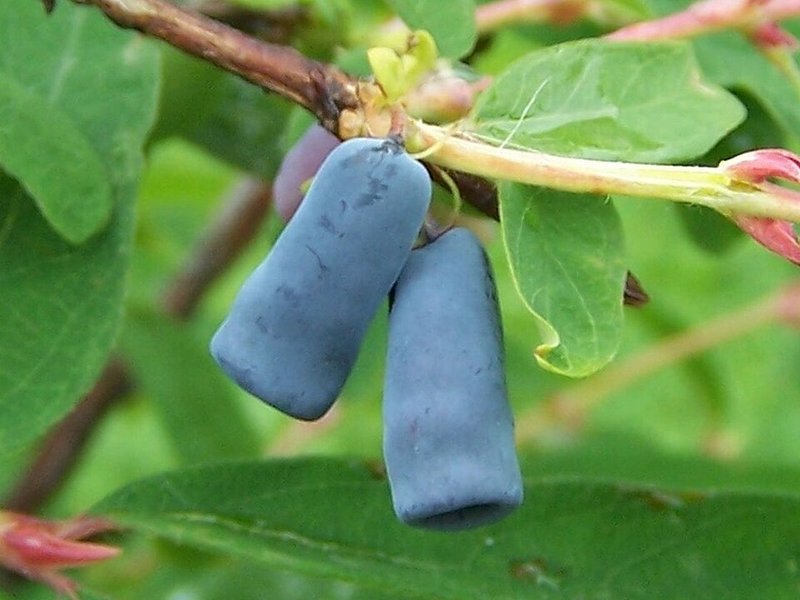
Haskap
Lonicera caerulea
Family: Caprifoliaceae
Pet & Human Safety
People: No hazard foundPets: Not on the ASPCA lists as we read them
No source we checked assesses this plant for pets, so the app makes no pet claim either way.
Poison control
If someone has collapsed, cannot be woken, is having a seizure or has trouble breathing, call 911 now. For any other possible poisoning, call Poison Help: 1-800-222-1222.
Emergency number source: U.S. federal law (47 U.S.C. § 251(e)(3)), read 2026-10-07.
Naturalist Lore
Historical Background & Breeding Lore
The history of this plant and its name, and how it was bred, where we have them.
Get the app: coming soonCare
- Hardiness zones
Canada (University of Saskatchewan, hardiness system not named on the page): Zones 1 to 4 in the page introduction; hardy to Zone 1 in another section; the page does not reconcile the two; Canada (Ontario OMAFRA, system not named on the page): Hardiness zone 2; viable blossoms noted below -6 C; USDA (Iowa State): Zones 2 to 6; USDA (Wisconsin Extension): Zones 1 to 8; Utah State: No zone range given; cold-region types suffer scorching, mildew and early leaf drop above zone 6
- Mature size
University of Saskatchewan: 4 to 7 ft (1.2 to 2 m) tall and about 4 ft (1.2 m) wide. Iowa State: 4 to 6 ft tall. Utah State: up to about 6 ft high and wide, with named varieties ranging from 4 to 6 ft. Wisconsin Extension: 3 to 6 ft tall. Spacing: University of Saskatchewan: at least 3 ft (1 m) from each other and other plants. OMAFRA: about 2.5 ft (0.75 m) in the row for a hedge, about 4.3 ft (1.3 m) or more for individual bushes, about 8.2 ft (2.5 m) or more between rows. Bors: about 3.3 ft (1 m) in the row for a hedge, about 4.3 ft (1.3 m) for individual bushes. Utah State: 3 to 4 ft in the row and 6 to 10 ft between rows.
- Where it comes from
Iowa State says honeyberry is a honeysuckle native to cold regions of Europe, Asia and North America. Single source.
How to prepare the soil, when and what to feed, and how and when to prune where that applies.
Get the app: coming soonAnatomy & Guilds
Botanical Anatomy & Characteristics
How the flowers and leaves are built and which pollinators visit, where we have them.
Get the app: coming soonField Doctor
Field Doctor
What can go wrong with this plant and what to do about it, where we have them.
Get the app: coming soonVintage Plates
Vintage Plates
Old botanical drawings from public libraries are in the app, for plants where we have them.
Get the app: coming soonSources
- University of Saskatchewan Gardening, Haskap
- Bors, Growing Haskap in Canada (University of Saskatchewan author; PDF hosted by University of Wisconsin Extension)
- Ontario OMAFRA, Haskap (Lonicera caerulea) crop page
- Utah State University Extension, How to Grow Haskap (Blue Honeysuckle) in Your Garden
- Iowa State Extension, What are honeyberries?
- University of Wisconsin Extension, Honeyberries
- NDSU Carrington Research Extension Center, Haskap
- NC State Extension Gardener Plant Toolbox, Lonicera maackii (Amur honeysuckle; a relative, warning direction only)
- NC State Extension Gardener Plant Toolbox, Lonicera japonica (Japanese honeysuckle; a relative, warning direction only)
- USDA NRCS Plant Guide, twinberry honeysuckle (Lonicera involucrata, LOIN5; a relative, warning direction only)
- RHS, Edible honeysuckle
- Kew World Checklist of Vascular Plants (WCVP), names file dated 2026-06-04