
 Plot & Petal
Field ManualAll plants
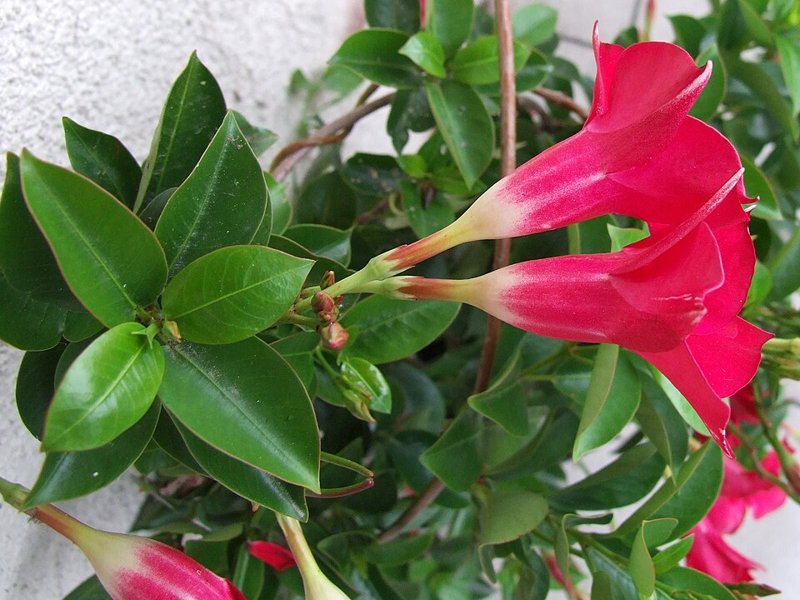
Mandevilla
Mandevilla
- Twining Climbing Vine
Pet & Human Safety
People: Skin irritant to peoplePets: Not on the ASPCA lists as we read them
No ASPCA or land-grant university source found for this genus's toxicity. Worth flagging for context, not as a verdict: Mandevilla belongs to the dogbane family (Apocynaceae), the same family as oleander, and many consumer gardening sites describe its milky latex sap as a skin/eye irritant on contact. That claim is not confirmed by ASPCA or a university source, so it is not asserted here as fact: no verdict is given, and the family context is noted for awareness only.
PlotAndPetal cannot tell you whether a plant you found can be eaten. Only someone who can see the plant can identify it.
Poison control
If someone has collapsed, cannot be woken, is having a seizure or has trouble breathing, call 911 now. For any other possible poisoning, call Poison Help: 1-800-222-1222.
Emergency number source: U.S. federal law (47 U.S.C. § 251(e)(3)), read 2026-10-07.
Naturalist Lore
Historical Background & Breeding Lore
The history of this plant and its name, and how it was bred, where we have them.
Get the app: coming soonCare
- Hardiness zones
USDA zones 10 to 11 (dies back to the ground with a freeze)
- Water needs
moderate
- Mature size
10-20 feet in the landscape on a support structure; substantially smaller and moundier in a container (Clemson HGIC).
- Family
Apocynaceae (dogbane family)
- Where it comes from
Tropical America; roughly 100 species in the genus (Clemson HGIC).
How to prepare the soil, when and what to feed, and how and when to prune where that applies.
Get the app: coming soonAnatomy & Guilds
Botanical Anatomy & Characteristics
How the flowers and leaves are built and which pollinators visit, where we have them.
Get the app: coming soonField Doctor
Field Doctor
What can go wrong with this plant and what to do about it, where we have them.
Get the app: coming soonVintage Plates
Vintage Plates
Old botanical drawings from public libraries are in the app, for plants where we have them.
Get the app: coming soon