
 Plot & Petal
Field ManualAll plants
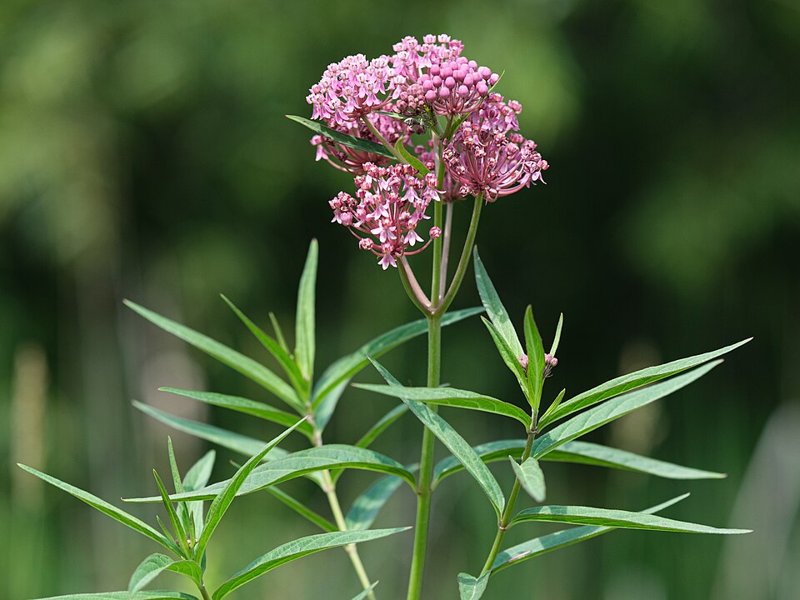
Milkweed
Asclepias incarnata
- Monarch Butterfly Host Plant
- Pollinator Favorite
Pet & Human Safety
People: Toxic to people (low severity)Pets: Toxic to pets
ASPCA's toxic principles: cardiotoxins (steroidal glycosidic cardenolides) in some species, neurotoxins in others. Clinical signs: vomiting, profound depression, weakness, anorexia, and diarrhea are common, potentially followed by seizures, difficulty breathing, rapid weak pulse, dilated pupils, kidney or liver failure, coma, respiratory paralysis, and death. NC State Extension's species-specific toxic principles for Asclepias incarnata are cardiac glycosides and resinoids; the milky sap can also cause contact dermatitis and eye irritation on contact. This is a genuinely toxic plant, not a minor one: but it is also the Monarch butterfly's essential host plant, and this app does not discourage planting it for that reason.
PlotAndPetal cannot tell you whether a plant you found can be eaten. Only someone who can see the plant can identify it.
Poison control
If someone has collapsed, cannot be woken, is having a seizure or has trouble breathing, call 911 now. For any other possible poisoning, call Poison Help: 1-800-222-1222.
Emergency number source: U.S. federal law (47 U.S.C. § 251(e)(3)), read 2026-10-07.
Naturalist Lore
Historical Background & Breeding Lore
The history of this plant and its name, and how it was bred, where we have them.
Get the app: coming soonCare
- Hardiness zones
USDA zones 3a-9b (NC State Extension).
- Mature size
3-5 feet tall, 2-3 feet wide (NC State Extension).
- Family
Apocynaceae (dogbane family)
- Where it comes from
Native to much of the eastern and central US, typically found in wet sites (NC State Extension).
How to prepare the soil, when and what to feed, and how and when to prune where that applies.
Get the app: coming soonAnatomy & Guilds
Botanical Anatomy & Characteristics
How the flowers and leaves are built and which pollinators visit, where we have them.
Get the app: coming soonField Doctor
Field Doctor
What can go wrong with this plant and what to do about it, where we have them.
Get the app: coming soonVintage Plates
Vintage Plates
Old botanical drawings from public libraries are in the app, for plants where we have them.
Get the app: coming soon