
 Plot & Petal
Field ManualAll plants
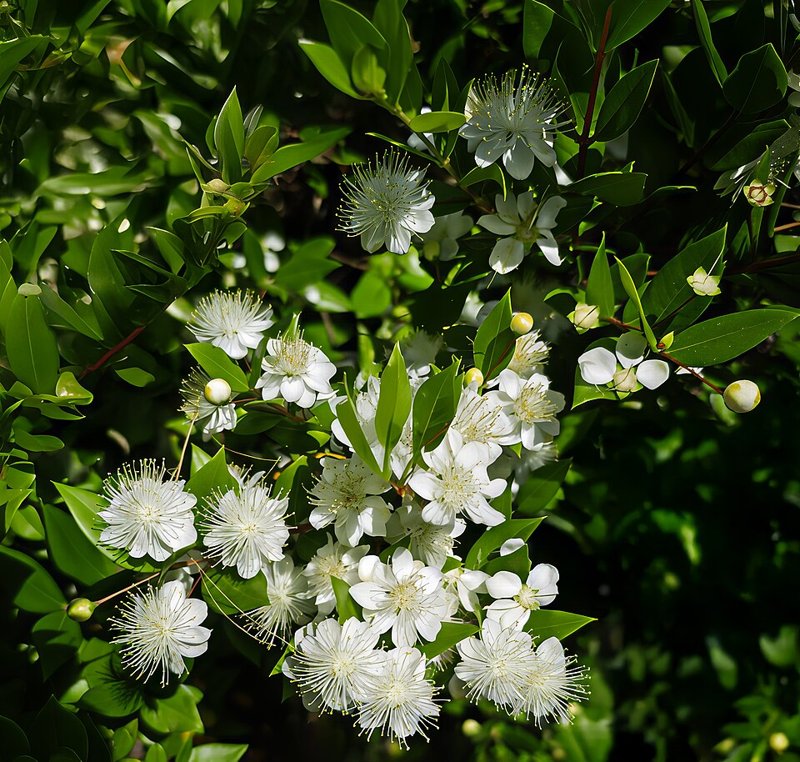
Common myrtle
Myrtus communis
Family: Myrtaceae
Pet & Human Safety
People: Not researchedPets: Not on the ASPCA lists as we read them
Dogs, cats, horses: no toxicity statement and no pet-problem flags at NC State, RHS, Junta de Andalucia or Calanques (NC State page has no Poison Severity line; RHS page shows no harm note). Absence of a statement is not an all-clear.
PlotAndPetal cannot tell you whether a plant you found can be eaten. Only someone who can see the plant can identify it.
Poison control
If someone has collapsed, cannot be woken, is having a seizure or has trouble breathing, call 911 now. For any other possible poisoning, call Poison Help: 1-800-222-1222.
Emergency number source: U.S. federal law (47 U.S.C. § 251(e)(3)), read 2026-10-07.
Naturalist Lore
Historical Background & Breeding Lore
The history of this plant and its name, and how it was bred, where we have them.
Get the app: coming soonCare
- Hardiness zones
USDA 8a-9b per NC State Plant Toolbox; RHS H4 per RHS (the profile text shows H4 after the rating scale; aspect west- or south-facing, sheltered); Spain (Junta de Andalucia seed sheet): a relatively warm-loving shrub that does not tolerate low winter temperatures (no zone system given)
- Light
Full sun per RHS; NC State allows partial shade.
- Water needs
moderate
- Mature size
US: 8-12 ft tall and 8-12 ft wide per NC State, which says the typical range is 5-6 ft tall and wide; UK: RHS: max height 2.5-4 m, max spread 1.5-2.5 m, 10-20 years to maturity; ES: Junta de Andalucia: can reach up to 5 m, normally 1-2 m tall; FR: Calanques park: can sometimes exceed 4 m
- Where it comes from
Northern Africa, southwestern Asia and southern Europe per NC State; Mediterranean per RHS; the Mediterranean basin per the Calanques park, which names garrigue and maquis habitats. Not native to GB/Ireland (RHS).
How to prepare the soil, when and what to feed, and how and when to prune where that applies.
Get the app: coming soonAnatomy & Guilds
Botanical Anatomy & Characteristics
How the flowers and leaves are built and which pollinators visit, where we have them.
Get the app: coming soonField Doctor
Field Doctor
What can go wrong with this plant and what to do about it, where we have them.
Get the app: coming soonVintage Plates
Vintage Plates
Old botanical drawings from public libraries are in the app, for plants where we have them.
Get the app: coming soon