
 Plot & Petal
Field ManualAll plants
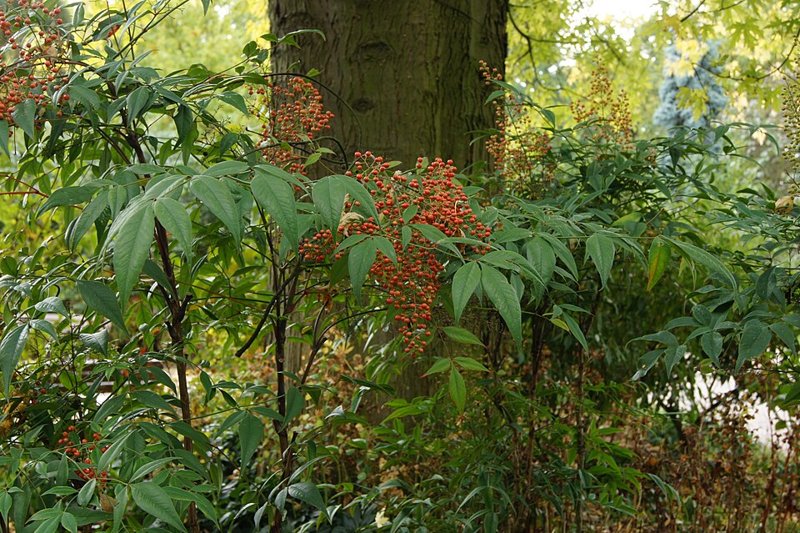
Nandina
Nandina domestica
Zones: 6a to 9b
- INVASIVE IN NORTH and CENTRAL FLORIDA (UF/IFAS ASSESSMENT)
- Cyanide-Producing Berries
- INVASIVE IN NORTH CAROLINA
Pet & Human Safety
Toxic to people and pets
Both ASPCA and NC State Extension agree directly and strongly: 'All parts contain cyanide and when consumed in quantity can be toxic' (NC State), rated HIGH severity, causing weakness, incoordination, seizures, respiratory failure, and death: dangerous to humans, pets, and birds specifically. This is one of the more seriously toxic plants surfaced in this whole project so far; the berries are also documented to have killed flocks of cedar waxwings that gorge on them in winter, an important wildlife note beyond pets specifically. Combined with the invasive-species flag above, this species is a strong candidate for a prominent in the app caution or even a "consider an alternative" note.
PlotAndPetal cannot tell you whether a plant you found can be eaten. Only someone who can see the plant can identify it.
Poison control
If someone has collapsed, cannot be woken, is having a seizure or has trouble breathing, call 911 now. For any other possible poisoning, call Poison Help: 1-800-222-1222.
Emergency number source: U.S. federal law (47 U.S.C. § 251(e)(3)), read 2026-10-07.
Naturalist Lore
Historical Background & Breeding Lore
The history of this plant and its name, and how it was bred, where we have them.
Get the app: coming soonCare
- Hardiness zones
USDA zones 6a to 9b
- Mature size
3-8 feet tall, 2-5 feet wide (NC State Extension).
- Family
Berberidaceae (barberry family)
- Where it comes from
Eastern Asia (China, Japan, India); now naturalized and considered invasive in parts of the southeastern US, including North Carolina (NC State Extension, ASPCA).
How to prepare the soil, when and what to feed, and how and when to prune where that applies.
Get the app: coming soonAnatomy & Guilds
Botanical Anatomy & Characteristics
How the flowers and leaves are built and which pollinators visit, where we have them.
Get the app: coming soonField Doctor
Field Doctor
What can go wrong with this plant and what to do about it, where we have them.
Get the app: coming soonVintage Plates
Vintage Plates
Old botanical drawings from public libraries are in the app, for plants where we have them.
Get the app: coming soonSources
- ASPCA, Toxic and Non-toxic Plants: Nandina (verified 2026-09-29)
- NC State Extension Gardener Plant Toolbox, Nandina domestica (independent confirmation, plus invasive-species designation)
- UF/IFAS Assessment of Non-native Plants in Florida's Natural Areas, Nandina domestica (read 2026-10-05)
- Florida Natural Areas Inventory, Nandina domestica (FISC Category 1 and UF/IFAS Assessment by region; read 2026-10-05)
- UF/IFAS Gardening Solutions, Nandina (read 2026-10-05)