
 Plot & Petal
Field ManualAll plants
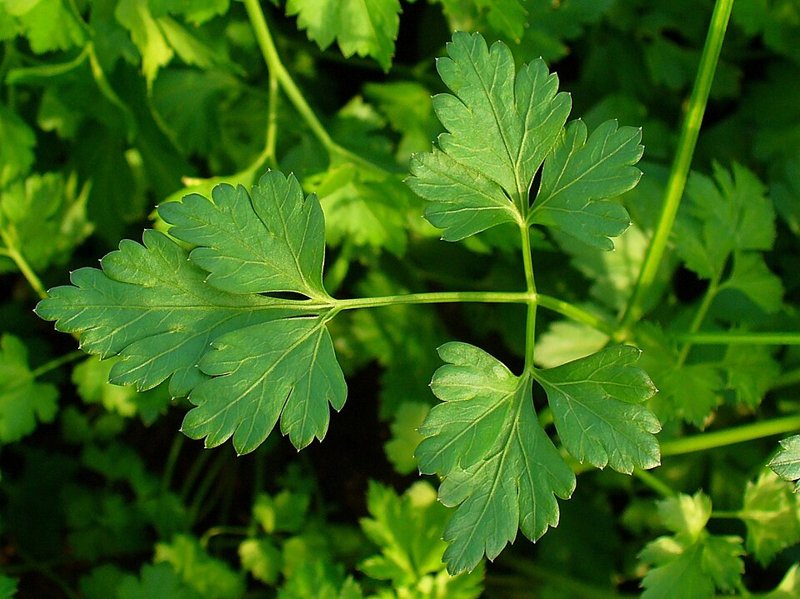
Parsley
Petroselinum crispum (Mill.) Fuss
Family: ApiaceaeOrigin: Mediterranean region; widely cultivated as a culinary herb
- Herb
- Biennial
- Full Sun/Partial Shade
Pet & Human Safety
People: Toxic to people (low severity)Pets: Not on the ASPCA lists as we read them
Toxic to dogs, cats and horses (ASPCA species page; NC State agrees). Parsley is a culinary herb; the concern is a pet eating more of the plant than garnish amounts. NC State also lists photosensitization (sunburn, dermatitis) in people.
Poison control
If someone has collapsed, cannot be woken, is having a seizure or has trouble breathing, call 911 now. For any other possible poisoning, call Poison Help: 1-800-222-1222.
Emergency number source: U.S. federal law (47 U.S.C. § 251(e)(3)), read 2026-10-07.
Naturalist Lore
Historical Background & Breeding Lore
The history of this plant and its name, and how it was bred, where we have them.
Get the app: coming soonCare
- Hardiness zones
Not checked yet
- Water needs
moderate to high
- Mature size
Clumping, erect habit; specific dimensions not given by sources used.
How to prepare the soil, when and what to feed, and how and when to prune where that applies.
Get the app: coming soonAnatomy & Guilds
Botanical Anatomy & Characteristics
How the flowers and leaves are built and which pollinators visit, where we have them.
Get the app: coming soonField Doctor
Field Doctor
What can go wrong with this plant and what to do about it, where we have them.
Get the app: coming soonVintage Plates
Vintage Plates
Old botanical drawings from public libraries are in the app, for plants where we have them.
Get the app: coming soonSources
- NC State Extension Gardener Plant Toolbox, Petroselinum crispum
- UF/IFAS Baker County, Dill, Fennel, Parsley
- Clemson HGIC, Herbs
- UF/IFAS EDIS, Herbs
- Rutgers, deer-resistant plants (via fairfaxgardening.org mirror)
- National Poison Control, lime juice/furocoumarin skin rash
- DermNetNZ, phytophotodermatitis
- CDC MMWR, Water Hemlock Poisoning
- National Poison Control, poison hemlock
- Kew World Checklist of Vascular Plants (WCVP), names file dated 2026-06-04
- ASPCA Toxic and Non-toxic Plants: Parsley (Petroselinum crispum)