
 Plot & Petal
Field ManualAll plants
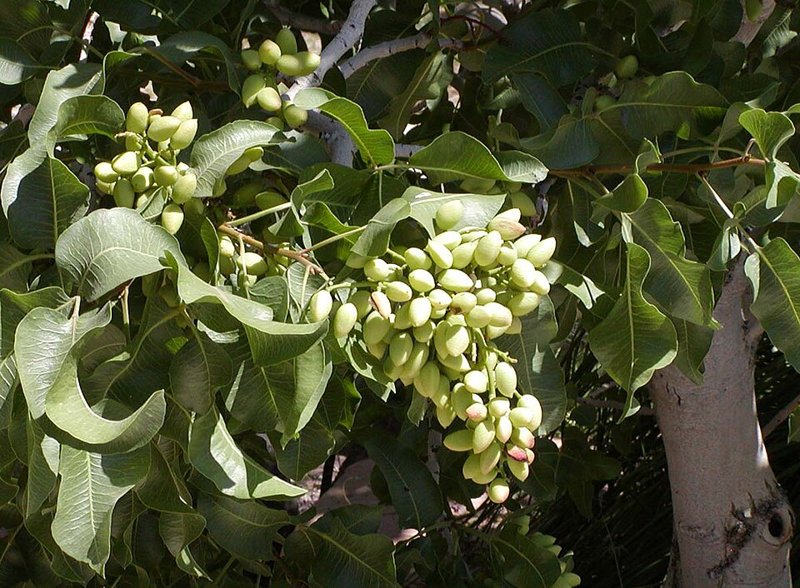
Pistachio
Pistacia vera L.
- Tree Nut
- MAJOR FOOD ALLERGEN (FDA)
- Dioecious
Pet & Human Safety
People: Toxic to peoplePets: Not on the ASPCA lists as we read them
No pet-toxicity verdict is recorded for pistachio: ASPCA has no page for it, and absence from that list is not a statement that it is safe. For people, tree nuts are a major food allergen under US food labeling law (FDA), and an NIH-hosted review names pistachio as one of the tree nuts that cause allergy. Pistachio belongs to the cashew family (Anacardiaceae), which also includes poison ivy; no university or government source used for this guide confirms a skin-contact risk from pistachio shells or hulls, so none is claimed here. See the hazard information below.
Poison control
If someone has collapsed, cannot be woken, is having a seizure or has trouble breathing, call 911 now. For any other possible poisoning, call Poison Help: 1-800-222-1222.
Emergency number source: U.S. federal law (47 U.S.C. § 251(e)(3)), read 2026-10-07.
Naturalist Lore
Historical Background & Breeding Lore
The history of this plant and its name, and how it was bred, where we have them.
Get the app: coming soonCare
- Hardiness zones
Utah State University Extension lists hardiness zones 4 to 9 for pistachio. The UC ANR home-gardener calendar says the tree needs about 850 hours below 45 F between November 1 and March 30, warm dry weather from July to early September for the kernels to mature, and tolerates short periods of winter cold down to about 27 F, though early fall and spring frosts can injure leaves and flowers. Those figures come from a California-type climate; no university or extension source used for this guide addresses growing it in a humid subtropical climate, so that should not be assumed.
- Mature size
Utah State University Extension gives a mature height of up to about 30 feet.
- Family
Anacardiaceae (cashew family; also includes mango, cashew, and poison ivy/sumac)
- Where it comes from
Western Asia and Asia Minor, according to the UC Fruit & Nut Research & Information Center. Utah State University Extension words it more loosely, calling the tree probably native to Asia and long grown in Asia Minor and the Mediterranean region.
How to prepare the soil, when and what to feed, and how and when to prune where that applies.
Get the app: coming soonAnatomy & Guilds
Botanical Anatomy & Characteristics
How the flowers and leaves are built and which pollinators visit, where we have them.
Get the app: coming soonField Doctor
Field Doctor
What can go wrong with this plant and what to do about it, where we have them.
Get the app: coming soonVintage Plates
Vintage Plates
Old botanical drawings from public libraries are in the app, for plants where we have them.
Get the app: coming soonSources
- GBIF Species Match API, Pistacia vera
- UC Fruit & Nut Research & Information Center, Pistachio Climate & Cultivars
- Utah State University Extension, Tree Browser: Pistachio
- UC ANR, Pistachio: Calendar of Operations for Home Gardeners
- FDA, Food Allergies
- FDA, Mycotoxins
- NIH PMC, Tree nut allergy (Advances in Dermatology and Allergology, 2021)
- NIH PMC, Contact Allergy Induced by Mango: A Relevant Topic?
- CDC MMWR, Dermatitis Associated with Cashew Nut Consumption: Pennsylvania