
 Plot & Petal
Field ManualAll plants
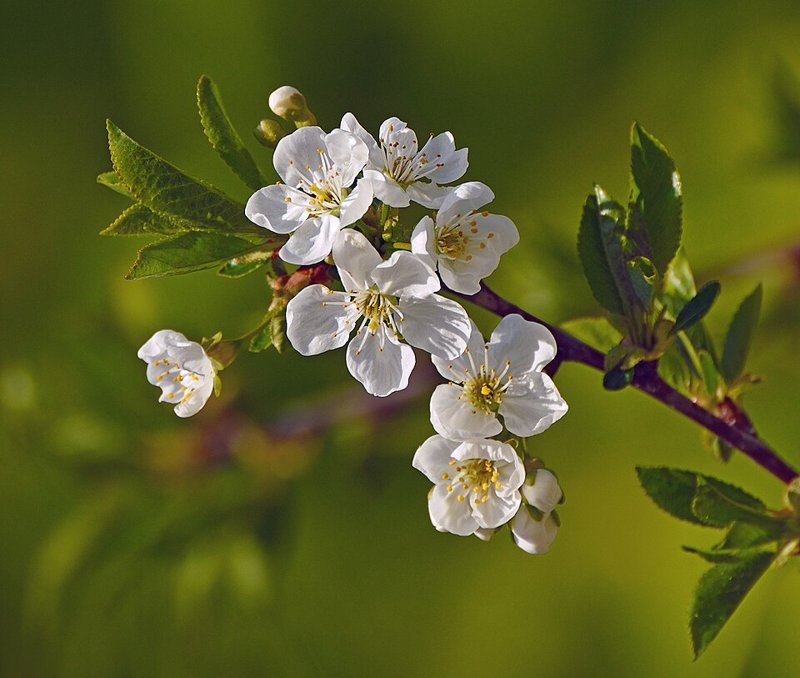
Sour cherry
Prunus cerasus
Family: RosaceaeOrigin: NC State: native to SW Asia and Europe
- Tree
- Self-fruitful
Pet & Human Safety
Toxic to people and pets
Toxic to pets at the scope stated in the source line. Keep it away from dogs and cats. Scope of the source: whole-genus (Prunus spp.).
Poison control
If someone has collapsed, cannot be woken, is having a seizure or has trouble breathing, call 911 now. For any other possible poisoning, call Poison Help: 1-800-222-1222.
Emergency number source: U.S. federal law (47 U.S.C. § 251(e)(3)), read 2026-10-07.
Naturalist Lore
Historical Background & Breeding Lore
The history of this plant and its name, and how it was bred, where we have them.
Get the app: coming soonCare
- Hardiness zones
USDA 3a-8b (NC State Plant Toolbox; USDA system). NC State: much more cold-hardy than sweet cherry.
- Mature size
Up to about 30 ft tall (NC State); width: our sources do not say. Variety sizes differ: Iowa State gives 'Northstar' 8-10 ft and 'Meteor' 10-14 ft. Spacing: Iowa State Extension rule for cherries: space trees about equal to their mature height. Iowa figure, not a Florida figure.
How to prepare the soil, when and what to feed, and how and when to prune where that applies.
Get the app: coming soonAnatomy & Guilds
Botanical Anatomy & Characteristics
How the flowers and leaves are built and which pollinators visit, where we have them.
Get the app: coming soonField Doctor
Field Doctor
What can go wrong with this plant and what to do about it, where we have them.
Get the app: coming soonVintage Plates
Vintage Plates
Old botanical drawings from public libraries are in the app, for plants where we have them.
Get the app: coming soonSources
- NC State Extension Gardener Plant Toolbox - Prunus cerasus
- ASPCA, Toxic and Non-toxic Plants: Cherry (Prunus spp., genus page)
- Iowa State University Extension, Growing Cherries in the Home Garden (reviewed February 2026)
- Illinois Extension, Cherries (Fruit Trees for Home Gardens)
- Iowa State University Extension, Stone Fruit Brown Rot (reviewed April 2022)
- UC IPM, Bacterial canker and blast (Pseudomonas syringae)
- University of Minnesota Extension, Black knot (reviewed 2018)
- UF/IFAS, Growing Plums in Florida (HS250) - checked for cherry, not covered
- Kew World Checklist of Vascular Plants (WCVP), names file dated 2026-06-04