
 Plot & Petal
Field ManualAll plants
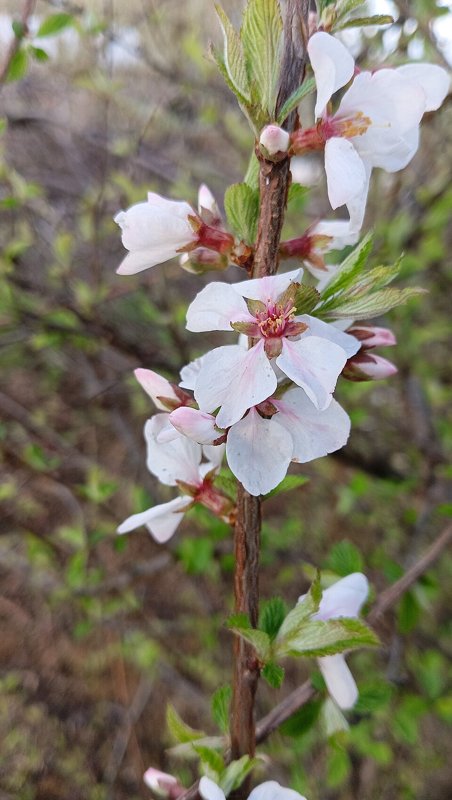
Nanking cherry
Prunus tomentosa
- Fruit shrub
- Cold hardy
- Poor in heat
Pet & Human Safety
People: No hazard foundPets: Toxic to pets
Toxic to pets at the scope stated in the source line. Keep it away from dogs and cats. Scope of the source: whole-genus (Prunus spp.). ASPCA's genus page says cherry stems, leaves and seeds contain cyanide (pet statement, genus level); no our sources states the same for Nanking cherry people-wise.
Poison control
If someone has collapsed, cannot be woken, is having a seizure or has trouble breathing, call 911 now. For any other possible poisoning, call Poison Help: 1-800-222-1222.
Emergency number source: U.S. federal law (47 U.S.C. § 251(e)(3)), read 2026-10-07.
Naturalist Lore
Historical Background & Breeding Lore
The history of this plant and its name, and how it was bred, where we have them.
Get the app: coming soonCare
- Hardiness zones
USDA hardiness zones 2a to 7b (NC State); NDSU: zone 2. NC State: not recommended for sites south of Zone 7.
- Mature size
Height 6-10 ft (NC State; Utah State: most 8-12 ft, some to 15 ft); width 6-15 ft. Spacing: NC State: available space to plant 6 feet-12 feet.
- Family
Rosaceae (rose family)
- Where it comes from
Caucasus, China, Japan and the Russian Far East (NC State).
How to prepare the soil, when and what to feed, and how and when to prune where that applies.
Get the app: coming soonAnatomy & Guilds
Botanical Anatomy & Characteristics
How the flowers and leaves are built and which pollinators visit, where we have them.
Get the app: coming soonField Doctor
Field Doctor
What can go wrong with this plant and what to do about it, where we have them.
Get the app: coming soonVintage Plates
Vintage Plates
Old botanical drawings from public libraries are in the app, for plants where we have them.
Get the app: coming soonSources
- NC State Extension Gardener Plant Toolbox, Prunus tomentosa
- Utah State University Extension, How to Grow Nanking Cherries in Your Garden (2016)
- NDSU Extension F2141, Nanking Cherry (June 2024)
- ASPCA, Toxic and Non-toxic Plants: Cherry (Prunus spp.)
- Kew World Checklist of Vascular Plants (WCVP), names file dated 2026-06-04
- ASPCA Toxic and Non-toxic Plants: Cherry, Black Cherry (Checked October 2026)