
 Plot & Petal
Field ManualAll plants
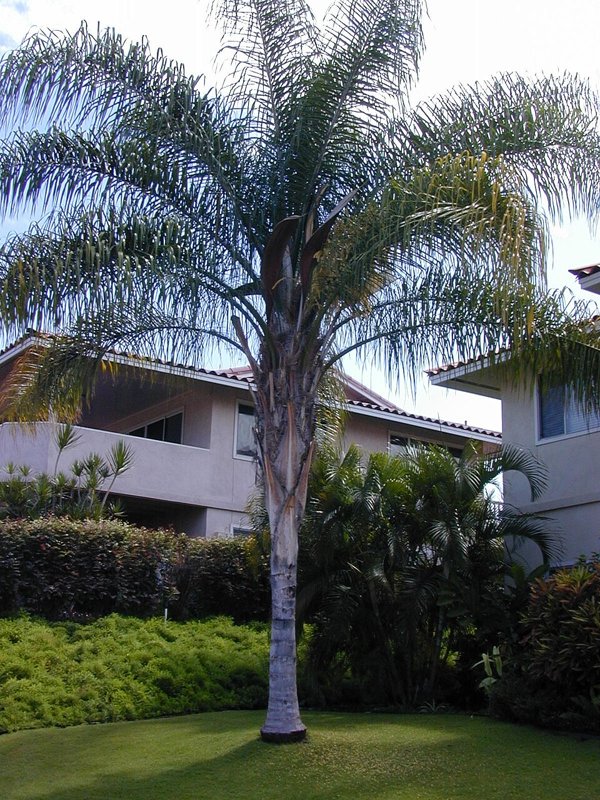
Queen Palm
Syagrus romanzoffiana
- Fast Growing
- Moderate Salt Tolerance
- Not Self-Cleaning
- Heavy Fruit Drop
Pet & Human Safety
People: Not researchedPets: Not on the ASPCA lists as we read them
ASPCA has no page for this plant, and no other source we use covers it. That is not a statement that it is safe. Keep dogs, cats and horses from eating it. This differs from a plant ASPCA has evaluated and rated non-toxic: it means not assessed, not cleared. That said, ASPCA DOES list and rate several other true palms in the same family (Areca, Majesty, Kentia, Lady, Parlor, Dwarf/Good Luck, Manila, Canary Date, Belmore Sentry) as Non-Toxic, a consistent family-level (Arecaceae) pattern worth noting for context, though not a substitute for a species-specific verdict. Important distinction: several very common 'palm' names actually belong to CYCADS, an entirely unrelated and far more dangerous plant group: Sago Palm (Cycas revoluta) and Cardboard Palm (Zamia furfuracea) are both cycads confirmed severely/potentially fatally toxic by ASPCA (liver failure), and neither is a true palm at all despite the name. Don't assume 'palms are generally fine' across that line. Separately, several non-university sources note fallen Queen Palm fruit and seeds as a physical choking/GI-obstruction hazard for dogs given their size and hardness: a mechanical risk, not a chemical toxicity claim, and not independently verified against a university or ASPCA source; included as general common-sense caution only, clearly labeled as such rather than as sourced toxicity data.
PlotAndPetal cannot tell you whether a plant you found can be eaten. Only someone who can see the plant can identify it.
Poison control
If someone has collapsed, cannot be woken, is having a seizure or has trouble breathing, call 911 now. For any other possible poisoning, call Poison Help: 1-800-222-1222.
Emergency number source: U.S. federal law (47 U.S.C. § 251(e)(3)), read 2026-10-07.
Naturalist Lore
Historical Background & Breeding Lore
The history of this plant and its name, and how it was bred, where we have them.
Get the app: coming soonCare
- Hardiness zones
USDA 9b and warmer, tolerating temperatures above 25 degrees F: described as one of the hardiest tropical-looking palms for marginal climates (UF/IFAS EDIS). Well suited to Central Florida.
- Mature size
Up to 50 feet tall with a 20-25 foot spread at maturity (UF/IFAS EDIS).
- Family
Arecaceae (true palm family)
How to prepare the soil, when and what to feed, and how and when to prune where that applies.
Get the app: coming soonAnatomy & Guilds
Botanical Anatomy & Characteristics
How the flowers and leaves are built and which pollinators visit, where we have them.
Get the app: coming soonField Doctor
Field Doctor
What can go wrong with this plant and what to do about it, where we have them.
Get the app: coming soonVintage Plates
Vintage Plates
Old botanical drawings from public libraries are in the app, for plants where we have them.
Get the app: coming soon