
 Plot & Petal
Field ManualAll plants
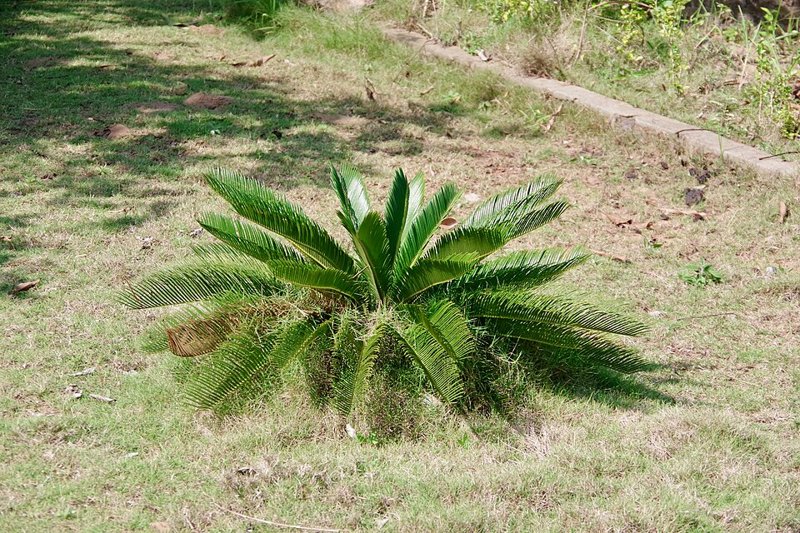
Sago Palm
Cycas revoluta
- Not a True Palm (Cycad)
- Extremely Slow Growing
- Drought Tolerant Once Established
- Salt Tolerant
Pet & Human Safety
People: Not researchedPets: Toxic to pets
People: not researched yet.
ASPCA confirms Toxic to Dogs, Toxic to Cats, and Toxic to Horses. Toxic principle: cycasin. ASPCA lists clinical signs including vomiting, melena, jaundice, increased thirst, hemorrhagic gastroenteritis, bruising, coagulopathy, liver damage, liver failure, and death. This is a high-severity toxicity profile: organ failure and death are named outcomes, not worst-case rarities: and should be flagged prominently in the app, not treated like a routine mild-GI-upset entry. NC State Extension independently corroborates severity, stating that all plant parts contain cycasin with the highest concentration in the seeds, and that ingestion of any part may cause permanent internal damage or death, including vomiting, diarrhea, weakness, seizures, and liver failure. UF/IFAS's consumer-facing fact sheet also warns in plain language that the plant contains a powerful neurotoxin that can cause paralysis or even death if not prepared properly, and that the seeds can also be poisonous to humans and animals if ingested: note this source frames it partly as a food-preparation hazard (sago starch is traditionally detoxified before human consumption in some cultures), a different framing from pure ornamental-plant toxicity but pointing at the same underlying toxin. Note: this ASPCA entry also covers Cardboard Palm and Coontie Palm under the same toxic verdict (see the look-alike warning above).
PlotAndPetal cannot tell you whether a plant you found can be eaten. Only someone who can see the plant can identify it.
Poison control
If someone has collapsed, cannot be woken, is having a seizure or has trouble breathing, call 911 now. For any other possible poisoning, call Poison Help: 1-800-222-1222.
Emergency number source: U.S. federal law (47 U.S.C. § 251(e)(3)), read 2026-10-07.
Naturalist Lore
Historical Background & Breeding Lore
The history of this plant and its name, and how it was bred, where we have them.
Get the app: coming soonCare
- Hardiness zones
USDA 9a-12b per NC State Extension's zone range (Missouri Botanical Garden states the narrower 9-10 for reliable outdoor hardiness). Not freeze tolerant once established outdoors (UF/IFAS); NC State specifies cold damage below approximately 15 degrees F.
- Mature size
Extremely slow growing: can reach up to 15 feet in 50 years (UF/IFAS); NC State gives a more typical mature size of 3-10 feet in both height and spread for most landscape specimens.
- Family
Cycadaceae (a cycad; not Arecaceae, the true palm family, despite the common name)
- Where it comes from
Kyushu (Japan's third-largest island) and the Ryukyu Islands, extending to southern China (Missouri Botanical Garden). UF/IFAS gives the broader description "tropical islands of southern Japan."
How to prepare the soil, when and what to feed, and how and when to prune where that applies.
Get the app: coming soonAnatomy & Guilds
Botanical Anatomy & Characteristics
How the flowers and leaves are built and which pollinators visit, where we have them.
Get the app: coming soonField Doctor
Field Doctor
What can go wrong with this plant and what to do about it, where we have them.
Get the app: coming soonVintage Plates
Vintage Plates
Old botanical drawings from public libraries are in the app, for plants where we have them.
Get the app: coming soonSources
- UF/IFAS Nassau County Extension, Fact sheet: Sago Palm
- UF/IFAS EDIS (Ask IFAS), FR316: Cycas revoluta, Sago Palm
- Clemson HGIC, Palms & Cycads
- NC State Extension Gardener Plant Toolbox, Cycas revoluta
- UF/IFAS Gardening Solutions, Cycad Aulacaspis Scale
- Missouri Botanical Garden Plant Finder, Cycas revoluta
- ASPCA, Toxic and Non-Toxic Plants: Sago Palm