Field ManualAll plants

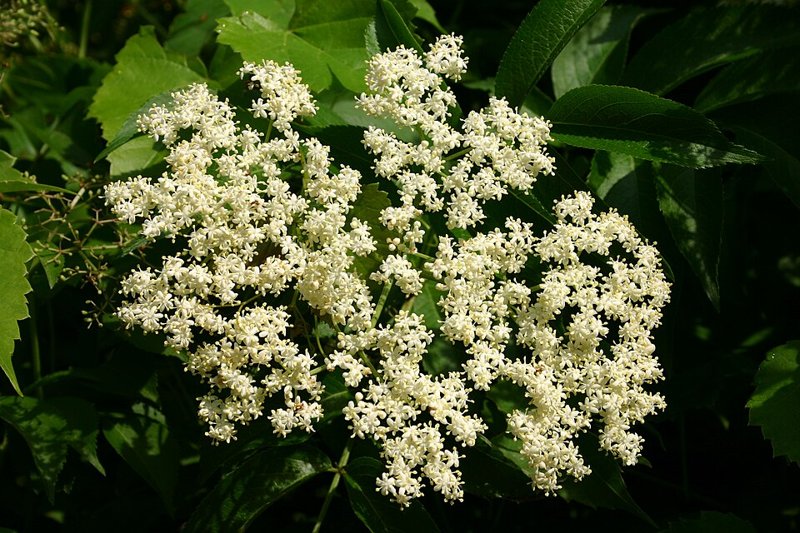
Photo: SB_Johnny, via Wikimedia CommonsLicense: CC BY-SA 3.0

American elderberry

Sambucus canadensis

  • Native
  • Fruit shrub
  • Cook berries

Pet & Human Safety

People: Toxic to people (low severity)Pets: Not on the ASPCA lists as we read them
Human edibility
Edible
Edible parts
cooked ripe berries, flowers
Hazardous parts
raw berries and unripe fruit, leaves, twigs, stems, roots, seeds
Preparation
Penn State: elderberries must not be eaten raw. Never eat the leaves; remove as many stems as possible; cooking the berries destroys the toxins in the seeds; process only deep purple, fully ripe berries. Never eat the poisonous red berries of ornamental Sambucus racemosa varieties. Canning advice differs between universities. Penn State (Feb 2025): elderberries are low-acid, cannot be canned safely in a boiling-water canner, and no research has been completed on pressure canning, so do not use traditional recipes. Oregon State EM 9446 (Nov 2024): low acid; use only specific high-sugar-ratio recipes for water-bath canning, and one tested recipe is published. University of Minnesota: treat as low acid, always add an acidifying ingredient (lemon juice, citric acid or vinegar) and follow a research-based recipe. Freezing and refrigerating cooked products is safe (Penn State). Oregon State says blue elderberry is high acid. None of these is a Florida source.
Hazard type
cyanogenic glycoside (sambunigrin) and alkaloid
Hazard route
ingestion
How complete this information is
The safety information on this page is partial. Where a source covers a point, it is shown; where none does, the page says so.

Toxic to pets
No ASPCA entry found.

ASPCA's list has no elderberry entry, so the app makes no dog or cat claim. NC State tags the plant 'Problem for Horses' (a horse flag only; dogs and cats are not named).

Look-alike warning
Could be mistaken for Cow parsnip (Heracleum maximum). To tell them apart: NC State names cow parsnip as a plant American elderberry is often confused with. Its own hazard was not researched here..
Look-alike warning
Could be mistaken for Red-berried elder (Sambucus racemosa), including ornamental cultivars. To tell them apart: Penn State Extension: never eat the poisonous red berries from ornamental Sambucus racemosa cultivars..
Look-alike warning
Could be mistaken for Plants that share its name. To tell them apart: Penn State treats American elderberry as Sambucus nigra ssp. canadensis; NC State and Kew POWO list Sambucus canadensis as its own species. The European elderberry (S. nigra ssp. nigra) is a separate record in this guide..

Poison control

If someone has collapsed, cannot be woken, is having a seizure or has trouble breathing, call 911 now. For any other possible poisoning, call Poison Help: 1-800-222-1222.

Emergency number source: U.S. federal law (47 U.S.C. § 251(e)(3)), read 2026-10-07.

Naturalist Lore

Historical Background & Breeding Lore

The history of this plant and its name, and how it was bred, where we have them.

Get the app: coming soon

Care

Hardiness zones

USDA hardiness zones 4a to 8b (US system).

Mature size

Height 5-12 ft; width 6-12 ft (NC State).

Soil & Drainage
Pruning & Flush Rhythm
Feeding Schedule

How to prepare the soil, when and what to feed, and how and when to prune where that applies.

Get the app: coming soon

Anatomy & Guilds

Botanical Anatomy & Characteristics

How the flowers and leaves are built and which pollinators visit, where we have them.

Get the app: coming soon

Field Doctor

Field Doctor

What can go wrong with this plant and what to do about it, where we have them.

Get the app: coming soon

Vintage Plates

Vintage Plates

Old botanical drawings from public libraries are in the app, for plants where we have them.

Get the app: coming soon

Sources

  1. NC State Extension Gardener Plant Toolbox, Sambucus canadensis
  2. Penn State Extension, Elderberry in the Garden and the Kitchen (updated 2025-02-24)
  3. Oregon State University Extension, EM 9446: Play it safe when preserving elderberries
  4. University of Minnesota Extension, Elderberries the safe way
  5. Kew World Checklist of Vascular Plants (WCVP), names file dated 2026-06-04

How we choose sources

Wishlists live in the app

Wishlists are part of the Plot & Petal app, which is coming soon. Nothing is added to a wishlist from this page.

Get the app: coming soon