
 Plot & Petal
Field ManualAll plants
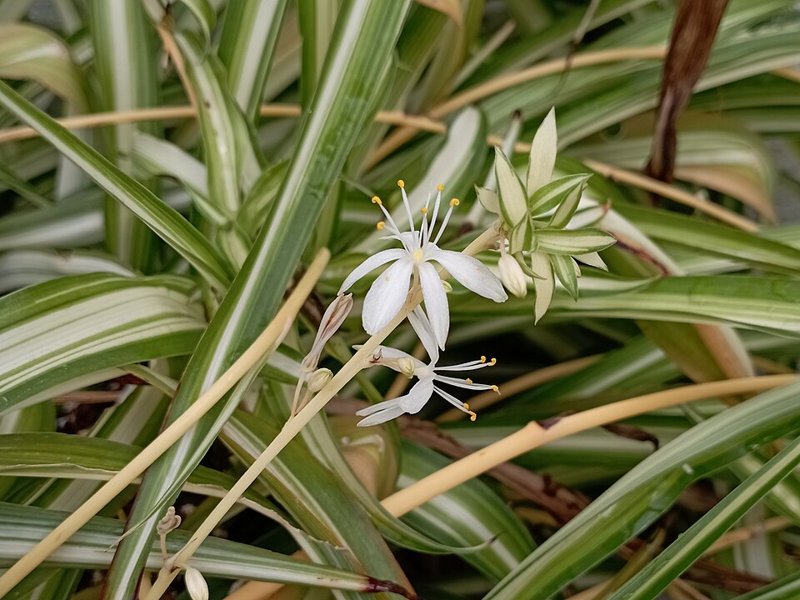
Spider Plant
Chlorophytum comosum
Family: Asparagaceae
- Low Light Tolerant
- Low Maintenance
- Easy Propagation
Pet & Human Safety
People: Not researchedPets: Not on the ASPCA lists as we read them
People: not researched yet.
ASPCA lists Spider Plant (Chlorophytum comosum) as Non-Toxic to Dogs and Non-Toxic to Cats: clean direct match, no naming-trap concerns. NC State Extension's independent listing agrees and additionally lists it as non-toxic to horses. Note for context only, not a formal toxicity finding from either source used: spider plant leaves are sometimes anecdotally reported to have a mild stimulant-like effect on cats similar to catnip, which is a behavioral curiosity rather than a poison-control concern, and is not something either sourced factsheet addresses: not included as a sourced claim, since it is a behavioral curiosity, not a toxicity finding.
PlotAndPetal cannot tell you whether a plant you found can be eaten. Only someone who can see the plant can identify it.
Poison control
If someone has collapsed, cannot be woken, is having a seizure or has trouble breathing, call 911 now. For any other possible poisoning, call Poison Help: 1-800-222-1222.
Emergency number source: U.S. federal law (47 U.S.C. § 251(e)(3)), read 2026-10-07.
Naturalist Lore
Historical Background & Breeding Lore
The history of this plant and its name, and how it was bred, where we have them.
Get the app: coming soonCare
- Hardiness zones
USDA 9a-11b outdoors, which puts Central Florida within range for sheltered outdoor/patio growing; commonly grown as a houseplant or hanging-basket plant everywhere (NC State Extension).
- Mature size
As a hanging-basket houseplant: 2-2.5 feet wide, 2-3 feet long including trailing stems (Clemson HGIC). In-ground/native form: 1-1.5 feet tall, 1-2 feet wide (NC State Extension).
- Where it comes from
Tropical West Africa to Cameroon, and Ethiopia to South Africa (NC State Extension). Previously classified as Anthericum comosum.
How to prepare the soil, when and what to feed, and how and when to prune where that applies.
Get the app: coming soonAnatomy & Guilds
Botanical Anatomy & Characteristics
How the flowers and leaves are built and which pollinators visit, where we have them.
Get the app: coming soonField Doctor
Field Doctor
What can go wrong with this plant and what to do about it, where we have them.
Get the app: coming soonVintage Plates
Vintage Plates
Old botanical drawings from public libraries are in the app, for plants where we have them.
Get the app: coming soon