
 Plot & Petal
Field ManualAll plants
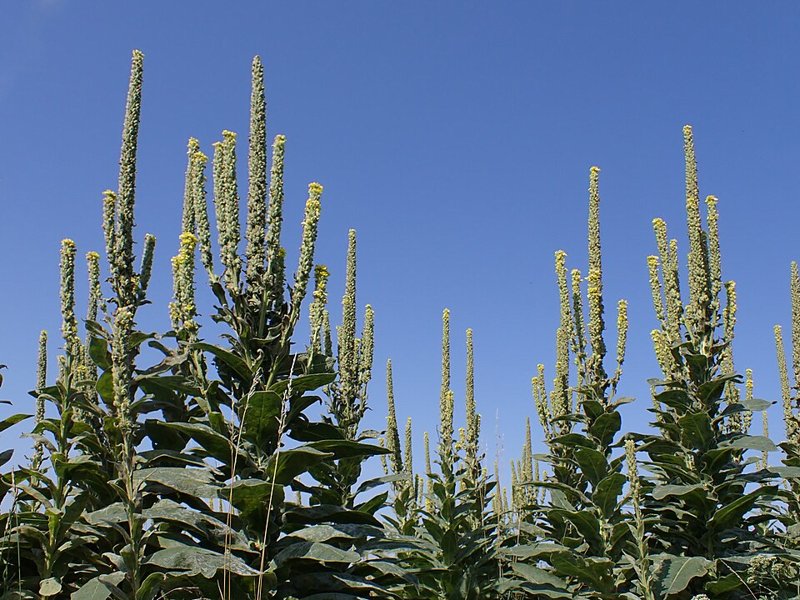
Common mullein
Verbascum thapsus
Family: Scrophulariaceae
Pet & Human Safety
People: No hazard foundPets: Not on the ASPCA lists as we read them
No ASPCA page assesses common mullein and the NC State page has no pet-problem tags, so the pet verdict is 'not listed'. This is not a clearance.
PlotAndPetal cannot tell you whether a plant you found can be eaten. Only someone who can see the plant can identify it.
Poison control
If someone has collapsed, cannot be woken, is having a seizure or has trouble breathing, call 911 now. For any other possible poisoning, call Poison Help: 1-800-222-1222.
Emergency number source: U.S. federal law (47 U.S.C. § 251(e)(3)), read 2026-10-07.
Naturalist Lore
Historical Background & Breeding Lore
The history of this plant and its name, and how it was bred, where we have them.
Get the app: coming soonCare
- Hardiness zones
USDA 3a-9b (NC State)
- Light
Full sun (6 or more hours of direct sunlight a day); tolerates some shade (NC State).
- Water needs
low
- Mature size
Height 3 ft to 10 ft (flower stalk can reach 10 ft or more); width 2 ft to 3 ft (NC State).
- Where it comes from
Native to Europe and Asia; naturalized across the United States and Canada (NC State). NC State attribute lists region of origin as Europe.
How to prepare the soil, when and what to feed, and how and when to prune where that applies.
Get the app: coming soonAnatomy & Guilds
Botanical Anatomy & Characteristics
How the flowers and leaves are built and which pollinators visit, where we have them.
Get the app: coming soonField Doctor
Field Doctor
What can go wrong with this plant and what to do about it, where we have them.
Get the app: coming soonVintage Plates
Vintage Plates
Old botanical drawings from public libraries are in the app, for plants where we have them.
Get the app: coming soon