
 Plot & Petal
Field ManualAll plants
Yew
Taxus baccata
Family: Taxaceae
- Common Hedge/Foundation Shrub (Cooler Climates)
- Sudden Cardiac Death Risk
Pet & Human Safety
Toxic to people and pets
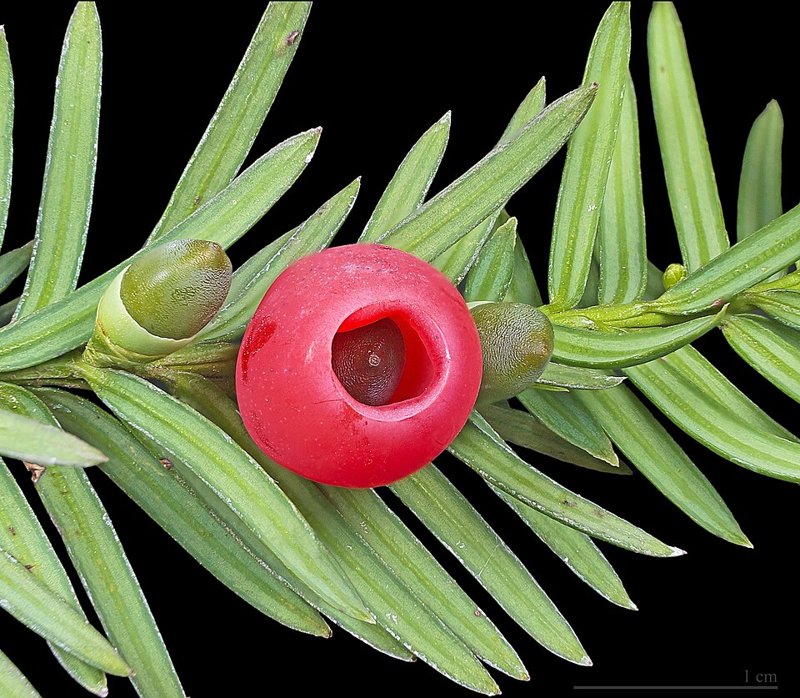
Toxic principle: taxine A and B alkaloids, plus a volatile oil. ASPCA-listed clinical signs: tremors, difficulty breathing, vomiting, seizures (dogs), and sudden death from acute heart failure: notably, death can occur with no preceding clinical signs at all, which makes yew one of the more dangerous ornamental plants despite looking unremarkable. Cornell says the toxins are in every part except the red aril, and the seed inside the aril is toxic. The app does not say any part of a yew may be eaten.
PlotAndPetal cannot tell you whether a plant you found can be eaten. Only someone who can see the plant can identify it.
Poison control
If someone has collapsed, cannot be woken, is having a seizure or has trouble breathing, call 911 now. For any other possible poisoning, call Poison Help: 1-800-222-1222.
Emergency number source: U.S. federal law (47 U.S.C. § 251(e)(3)), read 2026-10-07.
Naturalist Lore
Historical Background & Breeding Lore
The history of this plant and its name, and how it was bred, where we have them.
Get the app: coming soonCare
- Hardiness zones
Most garden yews are hardy roughly 4-7; generally too cold-loving for central Florida.
- Mature size
Varies widely by species and cultivar, from low spreading groundcover forms to large shrubs/small trees 20-40+ feet.
- Where it comes from
Taxus baccata is native to Europe; Taxus cuspidata is native to Japan and other East Asian yews are also widely planted. Several species and hybrids are grown as hedging and foundation shrubs in temperate climates; not a common Florida landscape plant.
How to prepare the soil, when and what to feed, and how and when to prune where that applies.
Get the app: coming soonAnatomy & Guilds
Botanical Anatomy & Characteristics
How the flowers and leaves are built and which pollinators visit, where we have them.
Get the app: coming soonField Doctor
Field Doctor
What can go wrong with this plant and what to do about it, where we have them.
Get the app: coming soonVintage Plates
Vintage Plates
Old botanical drawings from public libraries are in the app, for plants where we have them.
Get the app: coming soon